

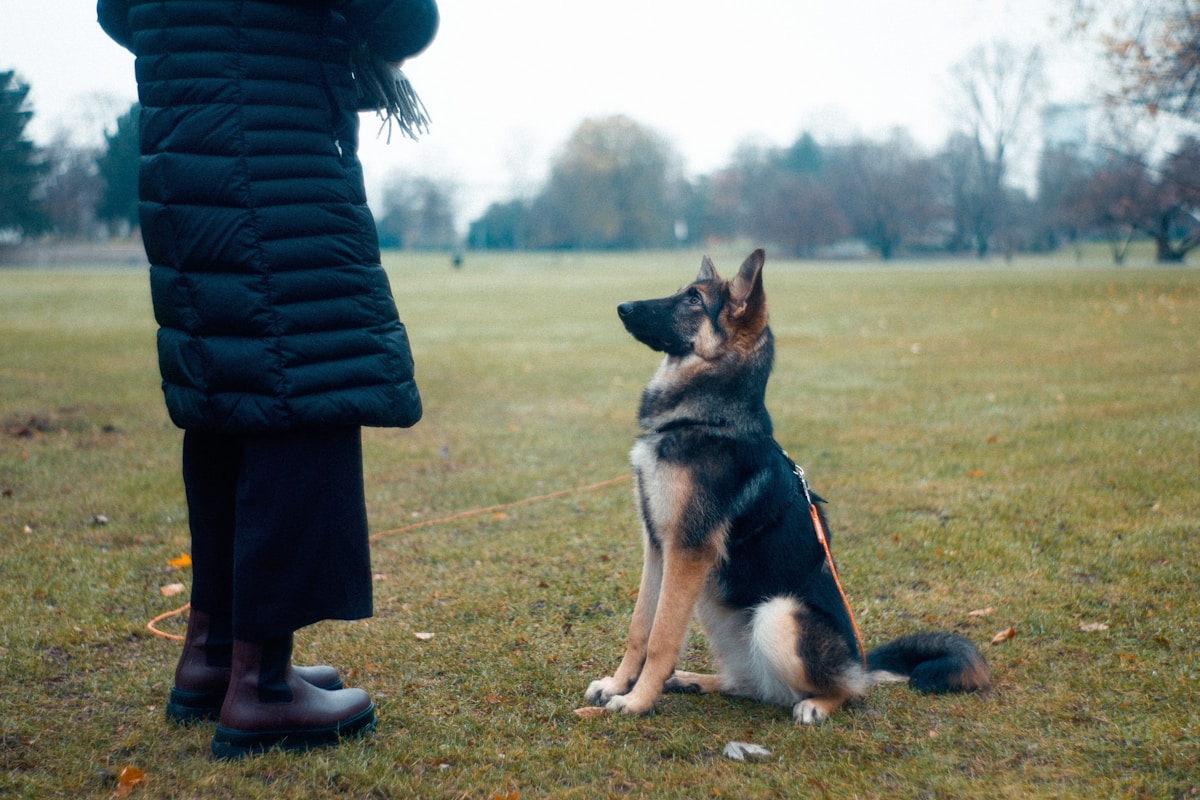
Imagine a simple domestic scene: you drop a piece of cheese on the kitchen floor, and it rolls beneath the edge of a cupboard, out of your dog’s direct line of sight. Your dog sniffs the floor where the cheese originally landed, searching frantically. You extend your arm, straighten your index finger, point directly toward the dark shadow beneath the cupboard, and say, look right there! Without missing a beat, your dog shifts its gaze from your hand, tracks the invisible linear trajectory of your finger across empty space, trots directly to the dark corner, and devours the cheese.
To human guardians, this everyday interaction feels utterly trivial. We take pointing so completely for granted that we rarely stop to consider the staggering cognitive architecture required to execute it. In the animal kingdom, understanding a declarative, referential pointing gesture is one of the rarest, most complex cognitive feats on Earth. If you execute that exact same pointing gesture toward our closest evolutionary relatives: wild chimpanzees, bonobos, or gorillas: they will typically stare blankly at the tip of your outstretched finger, sniff your fingernail, or ignore you entirely. Even captive chimpanzees raised alongside humans struggle profoundly with distal pointing comprehension.
Yet an eight-week-old domestic puppy that has never received formal training will follow a human point on its very first trial. How did a four-legged descendant of the predatory gray wolf become an undisputed genius at reading the subtle non-verbal communicative gestures of a two-legged primate? Drawing upon clinical cognitive research from the Association of Professional Dog Trainers, evolutionary anthropology from the Duke Canine Cognition Center led by Dr. Brian Hare, comparative psychology archives from the American Kennel Club, and veterinary behavior standards established by the American Veterinary Medical Association, this comprehensive guide examines the evolutionary, neurological, and social mechanisms that enable dogs to decode human referential communication.
The Cognitive Complexity of Referential Pointing
To appreciate why canine pointing comprehension is so revolutionary, one must break down the abstract cognitive steps an animal must perform to successfully decode a point.
1. Theory of Mind and Triadic Attention
Human pointing is an example of referential, triadic communication. Unlike dyadic interaction (where Person A interacts directly with Person B, such as staring into each other’s eyes), triadic interaction involves three entities: the communicator, the recipient, and an external third object or target in the environment.
To understand a point, an animal cannot view the human arm as an isolated physical object. The animal must possess a rudimentary Theory of Mind: the understanding that the human possesses independent mental states, knowledge, and intentions. The animal must deduce: That human knows where something desirable is located, they want me to know where it is, and they are using their limb as a visual symbol to direct my mental attention to that distant location. For non-human animals, bridging the physical gap between a pointing finger and a distant hidden target requires an astonishing degree of mental abstraction.
2. Geometric Vector Projection Across Empty Space
Furthermore, the recipient must perform geometric spatial projection. When a finger points, there is no physical beam of light, tether, or physical connection extending from the finger to the object. The animal must cognitively project an invisible geometric line (a vector) outward from the human shoulder, along the forearm, through the fingertip, across empty domestic space, and terminate that line precisely at the target. Most animals cannot grasp that the finger is referring to something other than the finger itself.
The Landmark Max Planck and Duke Cognition Experiments
The scientific breakthrough in understanding canine pointing began in the late 1990s and early 2000s through the pioneering comparative work of evolutionary anthropologists Dr. Brian Hare and Dr. Michael Tomasello at the Max Planck Institute for Evolutionary Anthropology in Leipzig, Germany.
1. The Two-Cup Object-Choice Paradigm
To test communicative comprehension objectively, researchers utilized the standardized two-cup object-choice task. A dog was positioned across from a human experimenter, with two identical opaque cups placed several feet apart on the floor. While the dog’s view was obstructed, a piece of high-value food was hidden beneath one of the cups. The experimenter then looked at the dog and presented a variety of pointing gestures toward the baited cup:
- Proximal Pointing: The experimenter’s fingertip hovered within a few inches of the baited cup.
- Distal Pointing: The experimenter stood equidistant between the two cups and pointed from several feet away, ensuring the hand was nowhere near the cup.
- Cross-Body Pointing: The experimenter used their right arm to point across their torso toward the cup on their left side, introducing complex visual angles.
- Momentary Pointing: The experimenter pointed for only one second and then returned their arm to their side before the dog was released to choose.
2. The Stunning Chimpanzee Defeat
When chimpanzees: animals sharing approximately ninety-nine percent of human DNA: were tested in this exact paradigm, they failed catastrophically. Chimpanzees chose at chance levels (fifty percent success rate), frequently choosing the empty cup or searching aimlessly. They viewed human gestures as physical competitive actions rather than cooperative communicative symbols.
Domestic dogs, by contrast, solved the task with extraordinary precision, succeeding on seventy to ninety percent of trials, even on difficult distal and cross-body variations. Most remarkably, dogs succeeded on their very first trials without any pre-training or practice, proving that pointing comprehension in domestic dogs is an inherent, robust cognitive capacity.
Clinical research conducted by the Cornell University College of Veterinary Medicine demonstrates that biological sensory thresholds and neurological adaptations play a defining role in everyday canine responses.
The Domestication Hypothesis: Wolves versus Puppies
How did dogs acquire this cognitive ability? Did they learn it through living in human homes, or was it genetically forged during the evolutionary process of canine domestication?
1. Testing Hand-Reared Wolf Pups
To isolate genetics from environmental learning, Dr. Brian Hare and his colleagues conducted landmark comparative trials comparing domestic dog puppies with gray wolf pups. The wolf puppies were hand-reared by human foster parents from ten days of age, bottle-fed, slept in human beds, and received intensive, round-the-clock human contact and socialization for twenty-four hours a day. The domestic dog puppies, by contrast, were raised in maternal litters with minimal human handling.
When tested on the object-choice pointing task, the heavily socialized wolf pups failed. Despite their deep affectionate bonds with their human foster parents, the young wolves could not read human pointing gestures; they viewed human hands as physical objects and relied strictly on their own independent exploration and olfaction. The domestic puppies, even at six to eight weeks of age with virtually zero prior human exposure, aced the pointing trials with ease. This definitive experiment proved that pointing comprehension is an innate, genetically selected evolutionary adaptation unique to the domestic dog.
2. The Self-Domestication and Social Intelligence Hypothesis
Why did domestication select for pointing comprehension? Ancestral canids that began scavenging around early human hunter-gatherer camps did not need brute strength; they needed low aggression and high social tolerance. Through a process of self-domestication, humans tolerated canids that possessed lower emotional reactivity (reduced adrenaline and fear) toward human proximity.
As canids evolved to live peacefully alongside humans, their cognitive systems were freed from constant fight-or-flight defensiveness. Natural selection began favoring individuals capable of reading human cooperative cues: subtle eye movements, hand gestures, and body language: because canids that could cooperate with human hunters obtained superior nutrition, shelter, and survival advantages. Over tens of thousands of years, this selective pressure hardwired the canine brain to treat human bodies as primary communicative guides.
The Hierarchy of Human Gestures: What Dogs Read Best
While dogs are communicative prodigies, their comprehension is heavily modulated by the specific biomechanical morphology of the human gesture.
1. Dynamic versus Static Gestures
Canine vision is exquisitely tuned for motion detection. Consequently, dynamic pointing: where the human arm moves in a fluid sweeping motion toward the target: elicits vastly higher success rates than static pointing, where the arm is already held rigid before the dog looks. The kinetic motion of the arm stimulates the magnocellular visual pathway, instantly capturing the dog’s attentional focus and directing it along the vector of movement.
2. Head Turns and Gaze Direction (Gaze Following)
Canines do not merely watch hands; they monitor human faces with remarkable precision. When an experimenter turns their head and gazes fixedly at a distant bowl without moving their arms, dogs follow the human eye gaze into distant space, turning their own heads to see what the human is observing. If a barrier (such as a wooden board) blocks the dog’s view of where the human is looking, the dog will actually walk around the barrier to see what the human sees on the other side: a sophisticated cognitive capacity known as geometrical gaze following.
3. Cross-Body and Foot Pointing
Pointing gestures that violate natural body symmetry introduce cognitive friction. Cross-body pointing (pointing across the chest with the opposite arm) or foot pointing (extending a foot toward a target) requires higher cognitive processing. While trained adult dogs can master foot pointing, young puppies perform significantly better with ipsilateral pointing: where the arm on the same side as the target is extended naturally outward.
Behavioral intervention frameworks approved by the International Association of Animal Behavior Consultants (IAABC) focus on systematic desensitization, low-stress handling, and positive environmental modification.
Neurobiology of Canine Social Processing: The Temporal Cortex and Caudate
Recent neuro-imaging breakthroughs utilizing awake canine functional Magnetic Resonance Imaging (fMRI) have mapped the exact neural networks activated when a dog decodes human social communication.
1. The Canine Fusiform Face Area Equivalent
In human neuroscience, the fusiform gyrus contains specialized neural circuitry dedicated exclusively to recognizing human faces. In 2015, neuro-scientists at Emory University discovered that domestic dogs possess an anatomically distinct region in their temporal cortex that activates selectively and intensely when viewing human faces and hands, compared to inanimate objects. This specialized neural hardware allows canines to dedicate immense computational power to analyzing human micro-expressions and directional hand movements.
2. Striatal Dopaminergic Activation by Cooperative Cues
When a dog successfully reads a human communicative gesture and discovers a hidden food reward, fMRI scans show massive activation of the caudate nucleus within the striatum. Interestingly, studies show that in many domestic dogs, the verbal praise and social acknowledgment delivered by the human upon discovering the target triggers higher dopamine activation than the food reward itself. Canines find the cooperative act of joint communication intrinsically rewarding on a neurochemical level.
Breed Variations and Training: Are Some Breeds Smarter at Pointing?
While pointing comprehension is universal across the domestic dog species, selective working breeding has created measurable differences in communicative style among distinct canine functional groups.
1. Working Sheepdogs and Gundogs (Cooperatively Bred Breeds)
Breeds that were selectively developed to work in continuous visual partnership with human handlers: such as Border Collies, Golden Retrievers, Labrador Retrievers, Australian Shepherds, and German Shepherds: exhibit the highest statistical accuracy in pointing comprehension tasks. Gundogs were bred for centuries to freeze and point toward hidden game, and subsequently follow the hunter’s arm gestures to retrieve fallen birds across vast marshes. These breeds display near-instantaneous latency when tracking human arm vectors.
2. Independent Hounds and Livestock Guardians (Independent Breeds)
Conversely, breeds developed to work autonomously at vast distances from humans without human oversight: such as Bloodhounds, Basset Hounds, Siberian Huskies, and Great Pyrenees: perform differently. These dogs understand the pointing gesture, but they possess lower intrinsic motivation to follow it. A Bloodhound’s brain is heavily wired to prioritize its own direct olfactory sensory data over a human’s visual suggestion. If a human points to Cup A, but the Bloodhound smells faint traces of food in Cup B, the hound will follow its nose rather than the human finger.
Practical Applications: How Handlers Can Optimize Directional Communication
Understanding the science of pointing allows dog owners, agility competitors, and search-and-rescue handlers to dramatically improve their communication with their dogs.
1. Establishing Visual Contact Before Pointing
Never throw a pointing gesture while your dog is looking away or sniffing the ground. Canines operate on ostensive communicative cues: signals that indicate communication is about to occur. First, capture your dog’s gaze by saying its name or using an attention cue. Once your dog makes direct eye contact, initiate the pointing gesture. This ensures the dog witnesses the dynamic motion of the arm, maximizing vector comprehension.
2. Aligning Body Posture and Gaze with the Target
Avoid contradictory body language. If you point your arm to the left, but keep your torso and eyes directed straight ahead, your dog receives conflicting data. To maximize clarity: turn your shoulders toward the target, look directly at the target with your eyes, and extend your arm along the line of sight. This congruent triadic alignment provides your dog with multiple reinforcing vectors.
3. Using Pointing for Cognitive Enrichment
Turn pointing into a fun domestic mental game. Take three identical opaque plastic cups, place them on the living room floor, hide a piece of cheese under one cup while your dog waits in a stay, and use pointing gestures to guide your dog to the correct cup. Gradually increase the distance between cups and practice subtle head-nods and eye-glances. This exercise engages your dog’s problem-solving circuitry and strengthens the cooperative bond between you.
The Siberian Silver Fox Experiments: Re-Creating Pointing in Real Time
The genetic basis of canine pointing comprehension received extraordinary experimental validation through the legendary Russian Silver Fox Farm Experiment, initiated in 1959 by geneticist Dr. Dmitry Belyaev and continued by Dr. Lyudmila Trut at the Institute of Cytology and Genetics in Novosibirsk, Siberia.
1. Selection for Tameness Alone
Belyaev and Trut set out to test the hypothesis that all physical, physiological, and cognitive traits of domestic dogs could be produced simply by selecting wild foxes (Vulpes vulpes) for a single behavioral criterion: low flight distance and lack of aggression toward humans (tameness). Over forty-five generations spanning decades, the researchers strictly bred the top ten percent of foxes that showed affectionate, friendly interest in human caretakers, without ever training them or teaching them commands.
Within several generations, the domesticated foxes began displaying the physical hallmarks of canine domestication: floppier ears, piebald spotted coats, curly tails, and juvenile skull morphologies: a phenomenon known as the Domestication Syndrome. But did their cognitive communicative abilities also change?
2. The Emergence of Spontaneous Pointing in Foxes
In the early 2000s, Dr. Brian Hare traveled to Novosibirsk to test the domesticated foxes on the identical two-cup object-choice pointing task. He tested two groups: the experimental line of domesticated foxes, and a control line of wild-behaving farm foxes bred in identical housing conditions.
The results were historic: the wild-type foxes failed the pointing test completely, staring at the experimenter’s hand or retreating into their kennels, mirroring wild wolves. The domesticated foxes, however, followed human distal pointing gestures on their very first trial with accuracy rates identical to domestic dog puppies. Because these foxes had never been trained or taught to cooperate with humans, this landmark trial proved beyond all doubt that selecting for low fear and social attraction toward humans automatically reorganizes the mammalian genome, unlocking high-level communicative cognition as an evolutionary byproduct of tameness.
The Cooperative Eye Hypothesis: Scleral Exposure and Eyebrow Muscles
Canine pointing comprehension does not operate in isolation; it is deeply interwoven with facial communication and shared gaze dynamics.
1. Human Eye Morphology and the Visible White Sclera
In comparative primatology, the Cooperative Eye Hypothesis, proposed by Michael Tomasello, notes that humans are the only primates on Earth with depigmented, brilliant white sclera (the whites of the eyes) surrounding a dark iris. In great apes, the sclera is dark brown or black, which camouflage gaze direction from predators and competitive rivals. The human eye evolved high-contrast white sclera specifically to advertise gaze direction: making it effortless for cooperative hunting and foraging partners to see exactly what an individual is looking at from dozens of feet away.
2. The Evolution of the “Puppy Dog Eyes” Muscle (LAOM)
In 2019, an international team of evolutionary anatomists led by Dr. Juliane Kaminski at the University of Portsmouth discovered an extraordinary anatomical divergence between wolves and domestic dogs. Domestic dogs possess a specialized facial muscle called the Levator Anguli Oculi Medialis (LAOM), which connects the dorsal eyelid to the facial fascia. Wild gray wolves completely lack this muscle, possessing only a sparse band of non-contractile connective tissue.
The LAOM muscle allows domestic dogs to voluntarily raise their inner eyebrows, creating an expressive, infant-like facial configuration that exposes their own sclera and triggers a powerful nurturing oxytocin surge in human caregivers. This expressive facial musculature enhances mutual gaze: allowing the dog to lock eyes with a pointing human, receive the ostensive social cue, and smoothly transfer its attention along the indicated vector.
Developmental Ontogeny: When and How Puppies Master Directional Vectors
To understand the biological maturation of this communicative genius, developmental researchers have charted the precise ontogenetic timeline of pointing comprehension across canine puppyhood.
1. The Critical Socialization Window (3 to 16 Weeks)
Canine neuro-development occurs in distinct chronological phases. Between three and four weeks of age, puppy sensory pathways: retinal cone differentiation and cochlear hair cell innervation: reach functional maturity. By five weeks of age, puppies begin displaying rudimentary gaze following. By seven to eight weeks of age, before the onset of the primary fear imprint period, domestic puppies demonstrate adult-level accuracy in following proximal and distal human points.
Unlike human children, who do not reliably master distal declarative pointing until approximately twelve to fourteen months of age, canine puppies achieve full communicative comprehension in a matter of weeks. This compressed developmental timeline reflects an intense evolutionary urgency: ancestral canids that could rapidly integrate into cooperative human packs survived the brutal selective pressures of the late Pleistocene epoch.
2. Neural Mirror Systems in Canid Social Processing
How does the canine brain convert the sight of a moving human arm into a mental spatial vector? Cognitive neuroscientists believe this capability relies on canine mirror neuron networks located within the premotor cortex and inferior parietal lobule.
Mirror neurons fire both when an individual performs a motor action and when the individual observes another performing that action. When a human extends an arm toward an object, the dog’s mirror neuron system simulates the goal-directed movement internally. The dog’s brain interprets the outstretched limb not as a random shape, but as a directed physical reaching action, automatically directing its own sensory apparatus toward the endpoint of the implied reach.
Sensory Specialization and Gesture Reliance Across Breed Categories
The degree to which an individual dog relies upon human pointing gestures is intimately linked to the sensory modalities amplified during its breed’s historical development.
1. Scent-Driven Independence in Scenthounds
Scenthounds (such as Basset Hounds, Beagles, and Bloodhounds) possess nasal structures containing up to three hundred million olfactory receptor neurons, coupled with low ear sets designed to sweep scent molecules upward into the nostrils. In cognitive trials, scenthounds demonstrate full theoretical understanding of pointing gestures; however, their behavioral execution is heavily modulated by conflicting sensory data.
If a human points toward an empty cup while the adjacent cup holds fragrant bacon treats, a retriever will typically follow the human point despite the lack of scent, trusting human cooperative intent. A scenthound, by contrast, will experience immediate sensory conflict and follow its olfactory epithelium directly to the bacon. To a scenthound, direct chemosensory data represents absolute truth, rendering human visual suggestions secondary.
2. Visual Vector Precision in Sighthounds and Herders
In stark contrast, sighthounds (such as Whippets, Salukis, and Borzois) and pastoral herding breeds (such as Border Collies and Belgian Malinois) prioritize visual tracking above all other senses. Their elongated retinas feature high horizontal ganglion cell densities that resolve distant spatial movements with extreme acuity. For these breeds, tracking an outstretched human arm or sweeping hand signal is nearly reflexive. They decode distal pointing vectors at distances exceeding one hundred yards, demonstrating how selective breeding fine-tuned visual communicative processing.
Clinical Ethology: Cognitive Aging and Referential Gesture Degradation
The ability to decode referential communication is a sensitive neurological barometer of overall cognitive health in aging canines.
1. Canine Cognitive Dysfunction and Attentional Shift Deficits
In geriatric canines suffering from Canine Cognitive Dysfunction Syndrome (CCDS), the accumulation of neurotoxic beta-amyloid plaques in the frontal cortex and hippocampus impairs executive function and working memory. One of the earliest behavioral symptoms observed by veterinary clinicians is the breakdown of triadic communicative engagement.
An aging dog that previously followed pointing gestures flawlessly may begin staring blankly at the human hand, displaying perseverative circling, or wandering aimlessly away from the target. The dog’s brain loses the ability to disengage attention from the immediate visual stimulus (the hand) and project the vector across space. Recognizing this loss of communicative comprehension allows veterinarians to intervene early with neuro-protective diets, antioxidant supplementation, and pharmaceutical therapies like selegiline.
2. Sensory Impairment Compensation Strategies
As dogs age, nuclear sclerosis and senile cataracts gradually reduce visual acuity and contrast sensitivity, making subtle distal finger points difficult to resolve across a dim room. Guardians of senior dogs can maintain effective communication by exaggerating directional gestures: using broad, whole-arm sweeping movements, pairing gestures with audible finger snaps or distinct verbal directional cues, and ensuring rooms are well-illuminated with flicker-free lighting.
Evolutionary Domestication Genomics: Convergence on Interspecies Ostensive Signals
Comparative cognitive science confirms that domestic dogs possess an extraordinary, evolutionary specialized capacity to comprehend human referential communication. While even human-raised chimpanzees frequently fail to grasp the directional significance of a human pointing arm, nine-week-old canine puppies succeed spontaneously without prior training.
This profound interspecies fluency arose through thousands of years of selective domestication pressures that favored wolves and proto-dogs capable of reading human communicative intent. Genomic studies highlight neural modifications in oxytocin receptor distribution that predispose canines to treat human body gestures as salient informational directives.
Distal versus Proximal Gestural Saliency in Comparative Canine Cognition Trials
In laboratory cognitive trials, researchers differentiate between proximal pointing, where the human finger terminates within inches of a target, and distal pointing across several meters. Domestic dogs demonstrate remarkable geometric comprehension, tracing the imaginary vector extending from the human shoulder, along the forearm, and across open space to the target container.
Canines attend not merely to the physical hand, but to the overarching ostensive cue signaled by human eye contact and vocal inflection before pointing. This multi-modal perceptual integration underscores why dogs treat human gestures as cooperative educational guidance.
Eye-Tracking Corroboration: Gaze-Alternation Mechanics between Humans and Canines
Advanced infrared eye-tracking studies demonstrate that dogs utilize gaze alternation to resolve ambiguous tasks or solicit human assistance. When confronted with an unsolvable puzzle box containing food, wolves persist in solitary mechanical manipulation, whereas domestic dogs rapidly look back and forth between the puzzle and the human face.
This triangular gaze alternation demonstrates sophisticated referential communication and shared intentionality. Understanding this innate cognitive instinct enables trainers to build responsive, cooperative working partnerships across scent work, service tasks, and everyday home manners.
Breed Selection Pressures: Working Herders versus Hounds in Referential Tasks
While referential gesture comprehension is universal across canis familiaris, breed-specific artificial selection influences processing latency. Cooperative working breeds such as Border Collies, Golden Retrievers, and German Shepherds exhibit rapid visual gaze locking on human handlers and instantaneous compliance with directional points.
Conversely, independent hunting breeds like scent hounds and livestock guardians process pointing cues more deliberatively, frequently cross-referencing visual directives with independent olfactory data before moving. Recognizing these breed-specific cognitive biases prevents handlers from misinterpreting thoughtful scent verification as stubbornness or cognitive deficiency.
Cognitive Enrichment Protocols: Advancing Referential Communication and Interactive Tasks
Harnessing a dog innate referential gestural comprehension through structured interactive games provides immense cognitive enrichment. Handlers can design progressive choice puzzles where canines must interpret subtle directional head nods, gaze shifts, or finger points to locate hidden scent rewards concealed beneath cups.
These cooperative cognitive exercises engage executive functioning in the canine frontal cortex, strengthening handler focus and boosting problem-solving confidence. Regular participation in referential communication challenges satisfies working drives, resulting in a relaxed, mentally fulfilled canine companion.
The cognitive comparative matrix presented below outlines the developmental milestones, gestural accuracy rates, and breed propensities that govern canine comprehension of human referential pointing.
Diagnostic Comparison Matrix: Communicative Gesture Comprehension Across Species
This table compares the ability of diverse animal species to decode human referential and communicative gestures:
| Animal Species | Distal Pointing Comprehension | Gaze Following into Distant Space | Required Training Level | Evolutionary Cognitive Mechanism | Typical Behavioral Reaction to Point |
|---|---|---|---|---|---|
| Domestic Canine | Exceptional (75% to 90% accuracy) | High (Follows gaze past barriers) | Zero (Innate in 8-week puppies) | Selection for cooperative communicative drive | Instantly follows vector to target |
| Socialized Gray Wolf | Poor to Failed (Chance performance) | Moderate (Tracks gaze to immediate face) | Extensive training needed for modest gains | Competitive conspecific pack hunting | Stares at finger or explores independently |
| Chimpanzee / Bonobo | Poor (Performs at 50% chance level) | High (Follows gaze, but misses referent) | Hundreds of trials needed for simple cue | Intense intra-species food competition | Stares at hand; expects physical food handoff |
| Domestic Feline | Moderate to Good (60% to 70% accuracy) | Moderate (Variable interest) | Minimal (Better with familiar owners) | Solitary hunting with domestic social adaptation | Glances toward target; approaches if motivated |
| Domestic Horse | Good (65% to 75% accuracy) | Moderate (Reads subtle body orientation) | Minimal (Naturally reads herd body language) | Prey herd synchronization and domestication | Moves head and body in indicated direction |
| Bottlenose Dolphin | Exceptional (80% to 90% accuracy) | High (Tracks underwater directional cues) | Extensive operant training required | High social cognition and echolocation sharing | Swims to pointed target with high precision |
Synthesizing these comparative findings demonstrates that referential communication is a foundational cognitive pillar of the human-canine bond. The curated frequently asked questions below address key practical inquiries regarding gesture training and cognitive enhancement.
Frequently Asked Questions (FAQs)
Do puppies naturally understand pointing, or must they be taught?
Puppies understand pointing naturally without any formal training. Landmark cognitive studies have shown that eight-week-old domestic puppies succeed on pointing tasks on their very first trial, demonstrating that this ability is an innate evolutionary adaptation of the domestic canine species.
Why did chimpanzees fail at understanding human pointing?
Chimpanzees evolved in an environment of fierce intra-species food competition. In their social structure, another individual’s hand approaching food usually represents an attempt to steal or claim that resource. Chimpanzees lack the cooperative communicative drive to view human gestures as benevolent, sharing indicators.
Can cats understand human pointing gestures?
Yes, cats can understand human pointing gestures, often achieving success rates between sixty and seventy percent. However, cats display lower average motivation to follow human cues compared to dogs, frequently choosing to explore according to their own agenda unless highly motivated by food.
Why does my dog look at my pointing finger instead of where I am pointing?
If a dog stares at your finger, it is experiencing local visual capture. This is common when the human’s hand is held too close to the dog’s nose, or if the hand recently touched treats and carries strong food odors. Step back, establish eye contact first, and make a distinct, fluid pointing movement toward the target.
Do wolves raised by humans ever learn to follow pointing?
Wolf pups hand-reared by humans from infancy can eventually learn to follow pointing after hundreds of repetitive training trials, but they never achieve the effortless, spontaneous comprehension displayed by domestic puppies. Their natural instinct is to solve problems independently rather than looking to humans for guidance.
Can dogs follow a human looking at something without pointing?
Yes. Dogs possess sophisticated gaze-following abilities. When a human turns their head and gazes intently at an object, dogs follow the line of sight into distant space, often using gaze direction to locate hidden toys or food.
What is the difference between proximal and distal pointing?
Proximal pointing occurs when the human fingertip is positioned within a few inches of the target object. Distal pointing occurs when the human stands at a distance (several feet or yards away) and points across empty space. Distal pointing requires significantly higher cognitive abstraction to project the vector across distance.
Why do hunting bird dogs naturally point with their bodies?
The hunting point displayed by breeds like English Pointers and Setters is a genetically modified remnant of the predatory hunting sequence: eye, stalk, freeze. Breeders selectively amplified the freeze portion of the predatory stalk so the dog stops motionless when scenting game, signaling the bird’s location to the hunter.
Does pointing with my foot work with my dog?
Yes, many dogs can learn to follow foot pointing, but it is cognitively more challenging than arm pointing. Canines naturally monitor human upper bodies, arms, and faces for communicative intent, so foot pointing typically requires brief operant conditioning.
Can a blind dog understand directional cues?
A blind dog cannot decode visual pointing gestures, but canines easily learn acoustic and olfactory directional cues. Tapping a target with a finger, snapping fingers in the direction of an object, or using directional verbal cues (such as left, right, find it) allows blind dogs to navigate with extraordinary precision.
The Shared Mind: The Miraculous Bridge Between Species
Every time you point across a room and your dog turns to follow your finger, you are participating in one of the most extraordinary evolutionary dialogues on Earth. In that split-second interaction, two species separated by tens of millions of years of distinct evolutionary history connect through a shared mental vector.
Your dog does not merely see your hand; it reads your mind, honors your intention, and trusts your guidance. Through the gentle pressures of domestication, canines developed the profound capacity to treat humans not as alien predators or competing carnivores, but as cooperative partners and trusted guides. Cherish every shared glance, celebrate every successful communication, and marvel at the miraculous evolutionary bond that allows a wolf’s descendant to understand the human hand.
In our modern world, we often search for connection across complex technological barriers. Yet the deepest, most authentic connection is waiting right at our feet: a companion who reads our silent gestures, shares our domestic spaces, and understands our intentions with quiet, unwavering devotion.
Through mutual understanding, cooperative engagement, and respectful communication, we continue an ancient partnership that transformed both canines and humans. When you extend your hand, you reach across the boundaries of species to touch the heart of a faithful friend.
The journey of canine domestication is an enduring testament to the power of cooperation over competition. When we nurture our dogs’ natural communicative brilliance, we participate in a living evolutionary marvel that continues to enrich our shared lives every single day.

Leave a Comment