
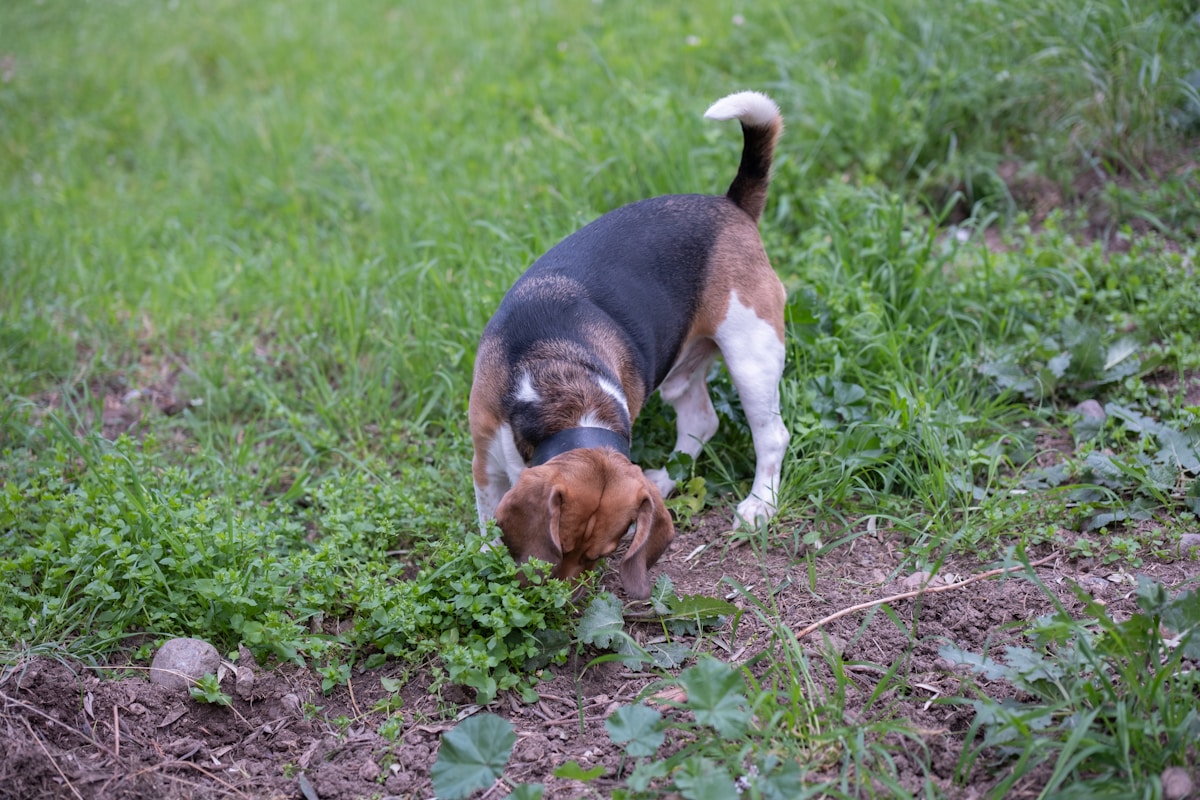
Every dog guardian knows the daily tug-of-war of the morning walk. You lace up your walking shoes, clip on the leash, and set out with a clear human agenda: brisk cardiovascular exercise, covering two miles, and keeping a steady aerobic pace. Within forty paces, your dog brings the expedition to an abrupt halt. Its nose drops to the damp earth at the base of a nondescript neighborhood telephone pole, a weathered fire hydrant, or a tuft of roadside dahlia grass. It does not merely glance at the spot; it inhales with urgent, rhythmic intensity.
You wait ten seconds, fifteen seconds, thirty seconds. You gently tug the leash, encouraging the dog to continue forward. The dog resists, pressing its nostrils deeper into the exact same three square inches of bark. It sniffs from the left, sniffs from the right, licks its lips, chuffs air through its lateral nasal slits, and sniffs again with eyes half-closed in deep contemplation. When you finally coax the dog twenty feet down the sidewalk, it stops at another patch of grass and repeats the identical ritual. To human eyes, this repetitive sniffing seems like an obsessive delay, an annoying waste of exercise time, or a stubborn refusal to walk. Why would an animal spend minutes inspecting a spot that looks completely unremarkable?
In the canine world, that telephone pole is not unremarkable wood; it is a high-bandwidth digital bulletin board, a chemical social network, and a community newspaper containing an intricate chronicle of neighborhood news. Termed colloquially as pee-mail or olfactory scent marking, this behavior is a masterclass in chemical ecology, evolutionary biology, and neuro-endocrinology. Drawing upon landmark research from the Association of Professional Dog Trainers, cognitive studies from Dr. Alexandra Horowitz’s Dog Cognition Lab at Barnard College, behavioral archives from the American Kennel Club, and clinical veterinary guidelines published by the American Veterinary Medical Association, this comprehensive guide examines the extraordinary science behind why dogs sniff the same spot repeatedly on walks, what they are reading, and why sniffing is essential for their mental health.
The Anatomical Marvel of the Canine Olfactory Apparatus
To comprehend why dogs become transfixed by a single patch of grass, humans must dismantle our anthropocentric sensory bias. Humans are visual primates; we navigate the world through sight, allocating less than five percent of our cerebral cortex to olfactory processing. Our nasal cavities contain approximately six million microscopic olfactory receptor neurons.
Canines live in a universe constructed almost entirely of scents. A dog’s nasal architecture is an evolutionary engineering masterpiece designed to sample, separate, and analyze microscopic chemical compounds with surgical precision.
1. Three Hundred Million Receptor Neurons and Massive Turbinates
Inside a canine snout lies a labyrinthine maze of delicate, scroll-like cartilaginous structures called ethmoid turbinates (conchae). Lined with a dense, vascularized mucous membrane, these turbinates house between two hundred million and three hundred million olfactory receptor neurons: fifty times more than human anatomy possesses. Furthermore, the olfactory bulb in the canine brain: the neurological processing hub dedicated to decoding scent molecules: is proportionally forty times larger than that of a human. A dog can detect a single drop of a specific chemical diluted into the equivalent of twenty Olympic-sized swimming pools, perceiving concentrations down to one part per trillion.
2. Dual-Airflow Dynamics: Sniffing versus Respiration
In human breathing, inhaled air travels through a single airway into the lungs; when we breathe out, exhaled air pushes out any scents being processed. Canines possess a specialized aerodynamic feature called the nasal alar fold: an interior tissue flap that separates breathing from smelling.
When a dog inhales during an active sniff, eighty-eight percent of the incoming air volume flows directly into the lower respiratory tract for gas exchange, while twelve percent is diverted into a specialized sub-ethmoidal olfactory recess lined with sensory turbinates. When the dog exhales, air does not rush out through the central nostrils; instead, it exits through bilateral lateral slits on the sides of the nose. This lateral exhalation creates microscopic micro-vortices of outward air that dislodge and kick up settled chemical molecules from the ground, drawing fresh scent plumes upward into the central nostrils upon the very next inhalation. A sniffing dog maintains a continuous, uninterrupted stream of chemical analysis at frequencies of five to seven sniffs per second.
The Science of “Pee-Mail”: What Chemical Data Is Written on That Post?
When your dog sniffs a telephone pole or fire hydrant, what is it actually reading? Canine urine and glandular secretions are not merely metabolic waste; they are sophisticated biological resumes packed with complex chemical compounds.
1. Scent Marking as an Asynchronous Social Network
Wild canids and domestic dogs utilize urine marking as a form of asynchronous territorial and social communication. Asynchronous communication means the two interacting parties do not need to be physically present at the same time or place. Scent marks allow dogs to broadcast their identity, presence, and physiological status while avoiding direct, potentially dangerous physical confrontations. Sniffing a mark is the canine equivalent of checking social media notifications, reading status updates, and posting a comment.
2. Major Urinary Proteins (MUPs) and Volatile Organic Compounds
Canine urine is rich in specialized carrier molecules known as Major Urinary Proteins (MUPs) and lipocalins. These barrel-shaped protein structures bind to volatile organic compounds (VOCs), fatty acids, and steroid hormones, protecting them from rapid evaporation. The protein matrix slowly releases these volatile odorants over hours and days, creating a long-lasting chemical broadcast. By analyzing the composition of these MUPs and volatile compounds, a sniffing dog can decode an astonishing array of biometric data about the animal that marked the spot:
- Biological Sex and Reproductive Status: Circulating concentrations of estrogens, progesterone, testosterone, and vaginal secretions reveal whether the marker is male, female, neutered, intact, or a female entering active estrus (heat).
- Individual Genetic Identity: Each dog possesses a unique Major Histocompatibility Complex (MHC) signature that produces an individual olfactory fingerprint as distinct as a human barcode. Your dog immediately recognizes whether the mark was left by its best friend from down the street, an unfamiliar newcomer, or a rival.
- Emotional State and Arousal: Cortisol metabolites, catecholamine residues, and adrenal secretions excreted in urine indicate whether the marker was calm, terrified, highly stressed, or aggressively confident when passing the post.
- Age, Health, and Immune Vigor: Inflammatory cytokines, ketone bodies, and glucose traces reveal the marker’s physical maturity, nutritional status, metabolic health, and underlying systemic illnesses.
- Temporal Timestamp (Time of Marking): Because volatile compounds evaporate and oxidize at precise, predictable biochemical rates, the ratio of remaining volatile compounds to stable protein carriers acts as a chronological timestamp. Your dog knows whether the mark was deposited twenty minutes ago, four hours ago, or yesterday afternoon.
Clinical research conducted by the Cornell University College of Veterinary Medicine demonstrates that biological sensory thresholds and neurological adaptations play a defining role in everyday canine responses.
The Vomeronasal Organ: Activating the Second Sensory Brain
When a dog sniffs a particularly compelling spot, it often displays a peculiar facial behavior: it presses its nostrils directly against the wet surface, chatters its teeth rapidly, curls its lips, and licks the ground. This behavior is the physiological activation of its vomeronasal organ.
1. The Mechanics of the Flehmen Response
Also known as Jacobson’s organ, the vomeronasal organ is an auxiliary olfactory structure located in the hard palate of the mouth, opening directly behind the upper incisors via the incisive ducts. While the main nasal epithelium processes airborne volatile odors, the vomeronasal organ is dedicated exclusively to detecting heavy, non-volatile chemical compounds: primarily pheromones and social chemical signals.
By chattering its teeth and licking the scent mark, the dog dissolves heavy chemical molecules in saliva. The tongue pumps this fluid upward through the incisive papillae into the sensory chambers of Jacobson’s organ. The specialized neuro-receptors in Jacobson’s organ project nerve impulses directly to the accessory olfactory bulb, which connects directly to the amygdala and hypothalamus: the emotional, social, and hormonal control centers of the canine brain. This provides the dog with deep, instinctual social knowledge that bypasses conscious rational thought.
The Psychology of the Sniffari: Mental Stimulation versus Physical Cardio
One of the most profound paradigm shifts in modern veterinary behavioral medicine is the recognition that physical running is not the primary purpose of a dog walk. Dogs require cognitive enrichment and sensory processing far more than mindless physical cardiovascular exertion.
1. Physical Exhaustion versus Mental Satiety
Many pet parents take an energetic dog on a fast, thirty-minute run where the dog is never permitted to stop or sniff. When they return home, they are bewildered to find that the dog remains hyperactive, pacing, whining, and unable to settle. Physical running builds athletic cardiovascular stamina without draining mental energy. In fact, intense running elevates circulating cortisol and adrenaline, leaving the dog in a heightened state of physiological arousal.
By contrast, dedicated sensory sniffing: often called a sniffari: engages the massive cognitive machinery of the canine brain. Decoding the complex chemical layers of a scent mark requires intense computational focus. Fifteen minutes of slow, self-directed olfactory exploration burns more cognitive energy than an hour of continuous brisk walking, leaving the dog relaxed, mentally fulfilled, and ready for deep, restorative sleep.
2. The Neuro-Chemical Calming Loop of Olfactory Foraging
Clinical studies in canine psychophysiology have demonstrated that the physical act of sniffing stimulates the canine parasympathetic nervous system via the vagus nerve. When a dog lowers its head and engages in rhythmic, low-frequency sniffing, its pulse rate measurably decreases, blood pressure normalizes, and circulating cortisol levels drop.
Simultaneously, active foraging and scent investigation activate the brain’s seeking circuit, driven by dopamine release from the ventral tegmental area. This provides genuine intrinsic satisfaction, transforming an ordinary neighborhood stroll into a rich, therapeutic decompression experience that alleviates domestic anxiety, reduces reactivity, and promotes emotional well-being.
According to clinical pathology references published in the Merck Veterinary Manual, early identification of underlying physiological changes provides the highest probability of positive long-term therapeutic outcomes.
Over-Marking and Counter-Marking: The Physics of Canine Graffiti
After your dog spends thirty seconds meticulously analyzing a scent mark on a fence post, it almost always executes a subsequent behavior: it lifts its hind leg (or squats) and deposits a small squirt of its own urine directly over or adjacent to the original mark. This behavior is known in ethology as over-marking or counter-marking.
1. Tactical Geometry: Why Height Matters
In the canine world, height is an optical and olfactory statement of status. Male dogs (and many athletic female dogs) perform contortions to lift their rear leg as high as physically possible, sometimes resting three paws on the air to deposit urine at the highest reachable point on a vertical post. There are two distinct evolutionary reasons for this acrobatic effort:
- Olfactory Dispersion Physics: A urine mark placed three feet off the ground on a vertical surface is exposed to faster, circulating ambient wind currents than a mark placed flat on the grass. The moving air catches the volatile scent compounds and disperses the scent plume across hundreds of yards, ensuring maximum reach throughout the territory.
- Honest Signatures and Bluffing: In ancestral packs, the physical height of a scent mark served as an honest biological indicator of the marker’s skeletal body size. A large, formidable wolf marked higher on a tree trunk than a subordinate juvenile. Interestingly, behavioral studies have demonstrated that small toy breeds (such as Jack Russell Terriers and Chihuahuas) frequently lift their legs at extreme angles to mark higher than their natural shoulder height, attempting to chemically project the impression of a larger, more formidable canine.
2. Adjacent Counter-Marking versus Direct Over-Marking
Dogs do not always spray directly on top of another dog’s mark. In many cases, a dog will deposit its urine one or two inches adjacent to the original mark. Ethologists refer to this as adjacent counter-marking: the dog is not attempting to obliterate or censor the previous dog’s message; it is placing its own signature alongside it, creating a multi-signature guest book that allows subsequent visitors to compare both individuals side by side.
Sniffing as a Stress-Displacement Mechanism and Conflict De-Escalation
Not all sniffing on walks is driven by pure curiosity or social communication; in many cases, sniffing serves as a vital psychological coping mechanism and canine calming signal.
1. Turid Rugaas and Canine Calming Signals
Renowned Norwegian canine behaviorist Turid Rugaas cataloged over thirty distinct body language signals that canines use to prevent conflict, de-escalate tension, and communicate peaceful intentions to other animals and humans: termed calming signals. Among the most frequent calming signals is ground sniffing.
When an unfamiliar, potentially intimidating dog approaches on a narrow sidewalk, an anxious or polite dog will often abruptly drop its nose to the grass and sniff with intense focus. To human eyes, the dog suddenly became interested in a dandelion. In canine dialect, however, dropping the head to sniff is a deliberate, polite avoidance of direct eye contact. It communicates: I am minding my own business. I am not looking for a fight. Please pass peacefully. If human guardians forcefully yank the dog’s head up and force it to walk directly past the approaching dog, they strip away its conflict-avoidance tool, frequently triggering reactive lunging or defensive barking.
2. Displacement Sniffing in Overwhelming Environments
Similarly, dogs frequently engage in displacement sniffing when they feel conflicted, over-aroused, or unsure of what to do. If a trainer gives a confusing command, if a noisy delivery truck rattles by, or if human guardians are arguing, a dog may suddenly begin sniffing the carpet or sidewalk frantically. The sniffing serves as a displacement behavior: an instinctual motor program that discharges excess nervous energy and grounds the nervous system during moments of social or cognitive conflict.
Neurochemistry of Olfactory Exhaustion: Glucose Dynamics and Sleep Satiety
To understand why fifteen minutes of dedicated sniffing leaves a high-energy dog as exhausted and contented as a five-mile run, we must look at the bio-energetic demands of the canine central nervous system.
1. High-Bandwidth Glucose Consumption in the Olfactory Bulb
While the canine brain represents only approximately two percent of total body weight, it consumes over twenty percent of the body’s total resting metabolic glucose. In canines, a massive portion of this metabolic expenditure is dedicated to the olfactory apparatus. When an active dog sniffs a multi-layered scent mark, hundreds of thousands of olfactory receptor neurons fire action potentials simultaneously.
These electrical impulses travel via the olfactory nerve (Cranial Nerve I) through the cribriform plate of the ethmoid bone into the olfactory bulb. The computational power required to isolate individual volatile compounds, compare them against stored neuro-chemical memories, and analyze temporal degradation requires immense cellular energy. Astrocytes surrounding olfactory synapses rapidly deplete intracellular glycogen reserves, breaking it down into glucose and lactate to fuel neuronal firing. This intense cerebral metabolism produces rapid cognitive fatigue, explaining why dogs sleep so deeply after sensory-rich walks.
2. Adenosine Accumulation and Slow-Wave Sleep Drive
As the brain’s neurons metabolize adenosine triphosphate (ATP) during intense olfactory processing, cellular byproduct adenosine accumulates within the extracellular space of the basal forebrain and hypothalamus. Adenosine is the master neurochemical driver of sleep pressure. High adenosine concentrations bind to A1 and A2A adenosine receptors, inhibiting wake-promoting histaminergic and orexinergic neural circuits while activating sleep-inducing GABAergic neurons in the ventrolateral preoptic nucleus (VLPO). This physiological process explains why dogs subjected to pure physical running without sniffing remain anxious, while dogs provided with rich olfactory decompression settle peacefully into restorative slow-wave sleep.
Bacteriological and Chemical Ecology of Scent Degradation in Soil
A scent mark on a fence post or tree trunk is not a static chemical deposit; it is an active, evolving biological ecosystem driven by environmental microbiology.
1. Microbial Fermentation and Volatile Transformation
When a canine deposits urine or glandular secretions onto soil or bark, the liquid immediately interacts with indigenous colonies of environmental bacteria: primarily Pseudomonas, Corynebacterium, and Bacillus species. These soil microbes utilize urinary urea, creatinine, and amino acids as nutritional substrates, breaking them down through enzymatic deamination and fermentation.
This microbial digestion transforms heavy, odorless precursor proteins into volatile fatty acids (such as isovaleric acid and butyric acid), ammonia, and sulfurous mercaptans. Consequently, a scent mark smells fundamentally different thirty minutes after deposition compared to six hours later. A dog sniffing a spot is not merely detecting what the original animal excreted; it is analyzing the precise metabolic stage of the bacterial fermentation cycle, which functions as an infallible biological clock.
2. Odor Plume Stratification and Atmospheric Micro-Climates
The physical structure of roadside vegetation creates micro-meteorological environments that trap scent plumes. During morning hours, ground radiation cooling produces thermal inversion layers within the bottom twelve inches of grass. These cool, moist micro-climates prevent volatile scent molecules from rising into the upper atmosphere, holding them in concentrated ground-level scent pools.
When the sun warms the earth in the afternoon, thermal convection currents begin carrying volatile molecules upward. An observant dog samples both the ground-level saturated soil and the elevated air currents, comparing the dense, lingering historical scent pool with the fresher airborne plume drifting past on the breeze.
The Canine Brain on Scent: Functional MRI Insights into Olfactory Topography
Recent developments in awake canine functional Magnetic Resonance Imaging (fMRI), conducted at leading neuro-behavioral veterinary institutes, have mapped real-time cerebral activation during scent processing.
1. The Direct Limbic Superhighway
In all mammals except canines, most sensory pathways (vision, hearing, touch) must first travel to the thalamus: the central sensory relay station: before being directed to the cerebral cortex for conscious evaluation. Canine olfaction, however, possesses a direct neural superhighway that bypasses the thalamus entirely.
Axons from the olfactory bulb project directly to the piriform cortex, the entorhinal cortex, and the amygdala. This direct anatomical wiring means that scents trigger instantaneous emotional, memory, and autonomic responses before the dog can even consciously reflect on the smell. When a dog inhales the scent of an aggressive neighborhood dog, its heart rate elevates and its muscles tense within milliseconds, driven by direct amygdaloid activation.
2. The Caudate Nucleus and Social Dopamine Activation
Furthermore, fMRI studies demonstrate that when a dog sniffs the scent signature of a familiar, friendly canine or human family member, the caudate nucleus: the brain’s primary reward center: illuminates with massive dopaminergic activity. Sniffing familiar social marks produces intense intrinsic pleasure, confirming that olfactory investigation is an essential social and emotional requirement for canine happiness.
The Clinical Hazards of Sniffing Deprivation: Leash Reactivity and Chronic Stress
Denying a dog the ability to sniff during daily outdoor excursions has documented clinical consequences for canine behavioral and physiological health.
1. Chronic Barrier Frustration and Leash Reactivity
When an owner constantly pulls a dog away from scent marks with tight leash corrections, the dog experiences chronic barrier frustration. The dog’s primary evolutionary tool for assessing environmental safety has been forcibly neutralized. An animal that is prevented from smelling its surroundings is forced to navigate the world blind to its chemical reality, leaving it in a state of hyper-vigilance.
In clinical behavioral medicine, dogs subjected to zero-sniffing walks show a drastically higher incidence of leash reactivity, barking, lunging, and fear-based aggression toward other dogs. Deprived of the ability to read the neighborhood’s chemical social network, the dog perceives approaching unfamiliar dogs as terrifying unknowns rather than familiar individuals whose biometric profiles it has already inspected on the telephone poles.
2. Cortisol Dysregulation and Behavioral Deterioration
Prolonged sensory deprivation on walks leads to dysregulation of the hypothalamic-pituitary-adrenal (HPA) axis. Without the parasympathetic vagal stimulation provided by rhythmic ground sniffing, circulating cortisol levels remain chronically elevated. This systemic stress manifests as domestic destructiveness, compulsive licking, pacing, and sleep fragmentation within the home. Re-introducing unstructured, long-leash sniffaris is one of the most effective, non-pharmaceutical interventions for canine anxiety.
Chemical Volatilization of Pheromones: Apolipoprotein and Steroid Residues in Canine Urine
Canine urine is not merely a waste product; it serves as a sophisticated chemical bulletin board containing volatile fatty acids, sex steroids, and apolipoprotein carriers. These microscopic chemical signatures convey an extraordinary amount of biometrical data to inspecting dogs, including individual identity, reproductive status, stress levels, and systemic health.
Lipophilic scent molecules adhere to vertical foliage, wooden posts, and concrete hydrant surfaces, resisting rain and environmental degradation for multiple days. When a dog sniffs repeatedly at a single spot on a walk, it is decoding this complex chemical ledger with microscopic precision.
Flehmen Response and the Vomeronasal Organ: Decoding Health and Reproductive Status
Deep sniffing is frequently accompanied by rapid jaw-chattering, teeth-clicking, and curling of the upper lip, known ethologically as the Flehmen response. This motor pattern drives fluid-borne chemical compounds through incisive ducts directly into Jacobson organ, or the vomeronasal organ, situated in the hard palate.
The vomeronasal organ bypasses standard olfactory cortex processing and projects directly to the amygdala and hypothalamus, triggering immediate hormonal and emotional interpretations. This direct neural pathway explains why novel scents capture a dog complete focus and provide profound mental enrichment.
Over-Marking Geometrics: Vertical Elevation Strategy in Canine Scent Postings
Dogs exhibit deliberate physical gymnastics to deposit their urine marks as high off the ground as anatomically possible. By elevating the leg and aiming for vertical surfaces, canines position their chemical signatures directly into ambient breeze air currents, maximizing scent plume dissemination across wider territory.
Furthermore, higher urine placement can create an optical and olfactory impression of larger physical stature to subsequent canine visitors. Small breeds frequently perform extreme leg lifts or handstand postures to project an authoritative chemical presence across their neighborhood walking route.
Cognitive Mental Stimulation: Why Olfactory Sniffari Walks Decompress the Canine Brain
Depriving a dog of sniffing opportunities on walks is equivalent to forcing a human to navigate the world blindfolded. Sensory processing of environmental scent matrices engages large portions of the canine forebrain, lowering resting heart rates, moderating cortisol secretion, and fulfilling biological foraging drives.
Allowing dogs dedicated sniffari periods on long loose leashes delivers deeper mental exhaustion and emotional contentment than miles of hurried, heel-focused pavement walking. Incorporating structured scent investigation into daily routines resolves numerous indoor anxiety and hyperactivity challenges.
Urban Scent Ecology: Decoding Scent Post Density and Olfactory Enrichment Strategies
In dense suburban and urban environments, communal walking routes function as dynamic chemical networks where dozens of neighborhood canines leave overlapping scent signatures daily. Allowing your dog adequate time to investigate vertical posts, fire hydrants, and grassy verges satisfies biological curiosity and fulfills essential social information-gathering drives.
Handlers should balance brisk aerobic leash walking with dedicated olfactory decompression zones where the dog leads the pace on a loose six-foot leash. Scent-guided exploration provides profound stress relief, lowering salivary cortisol levels and leaving dogs thoroughly contented upon returning indoors.
Incorporating novel scent games at home, such as hiding aromatic herb sachets or natural deer antlers in the yard, further exercises olfactory processing power. Valuing your dog chemical worldview transforms ordinary neighborhood outings into rich, mentally stimulating adventures.
The comprehensive chemical ecology matrix below provides an authoritative comparison of canine olfactory communication modalities, volatilization rates, and ethological posting behaviors across diverse walking terrains.
Canine Pheromone Dispersion Dynamics: Environmental Wind Currents and Evaporation Rates
Canine scent marking behavior is intimately tied to atmospheric physics and micro-climatic wind patterns that dictate volatile organic compound dispersion. When canines deposit urine on elevated vegetation, thermal updrafts carry volatile steroidal markers across extensive radii, broadcasting chemical messages to approaching conspecifics long before visual contact occurs.
Furthermore, seasonal variations in relative humidity and ambient temperature alter chemical volatilization rates significantly. High-humidity environments preserve moist scent residues for extended durations, allowing inspecting dogs to extract intricate chronological timelines regarding when neighboring canines traversed the path.
Diagnostic Comparison Matrix: The 6 Motivations Behind Repetitive Sniffing
This table compares the primary underlying motivations when a dog repeatedly sniffs a specific spot on a walk:
| Sniffing Motivation | Primary Sensory Target | Characteristic Canine Behavior | Biological / Psychological Purpose | Duration at Single Spot | Recommended Guardian Action |
|---|---|---|---|---|---|
| Social “Pee-Mail” Reading | Urine marks, MUPs, pheromones | Intense focal sniffing; counter-marking | Decode neighborhood identity and estrus | 15 to 45 seconds | Allow uninterrupted reading; do not yank leash |
| Predatory Tracking | Small mammal trails (squirrels/mice) | Fast forward pacing; nose glued to ground | Identify prey movements and freshness of trail | Continuous along a line | Permit exploration within safe physical bounds |
| Emotional Decompression | Ambient environmental ground scent | Slow, rhythmic sniffing; relaxed posture | Stimulate parasympathetic vagal calming | 30 to 90 seconds | Encourage slow sniffari; prioritize relaxation |
| Displacement / Stress Coping | Arbitrary grass patches or pavement | Sudden head drop when approached by triggers | De-escalate social tension; avoid conflict | Brief, sudden pauses | Identify external stressor; increase distance |
| Temporal Verification | Degrading scent layers on familiar spots | Sniffs perimeter of spot; compares layers | Measure time elapsed since previous visitor | 20 to 60 seconds | Patiently pause; honor the investigative process |
| Cognitive Mapping | Soil microbes, vegetation, substrate | Deep inhalations; head tilting; looking up | Anchor geographic position in spatial memory | 10 to 30 seconds | Facilitate spatial familiarity in new areas |
Understanding the chemical mechanics detailed in the comparison matrix above transforms ordinary daily walks into rich sensory decompression opportunities. To address specific owner inquiries about scent-marking habits and walk management, explore the focused frequently asked questions below.
Longitudinal field research confirms that providing structured scent exploration dramatically improves canine behavioral equilibrium indoors. Allowing your companion the autonomy to investigate high-density chemical posting trees satisfies ancient evolutionary foraging drives, producing a calm, fulfilled pet that settles peacefully upon returning home.
Frequently Asked Questions (FAQs)
Should I let my dog sniff as much as it wants on walks?
Yes. Veterinary behaviorists strongly recommend allowing dogs ample time for self-directed sniffing on walks. Sniffing is your dog’s primary method of gathering social information, exercising its brain, and regulating its emotional state. A walk without sniffing is like a human being forced to walk through an art gallery blindfolded with headphones blasting white noise.
Why does my dog lick urine spots on the ground?
Licking urine is an intentional behavior designed to activate the vomeronasal organ (Jacobson’s organ). Dissolving non-volatile pheromones in saliva allows the tongue to pump chemical messengers into the incisive ducts behind the front teeth, delivering deep hormonal and social data directly to the emotional centers of the brain.
Why do dogs chatter their teeth after sniffing a spot?
The rapid jaw chattering or teeth clicking seen after sniffing is the physiological manifestation of the flehmen response. The rapid jaw movements pump saliva and pheromones upward through the palate into the vomeronasal organ, enhancing chemical analysis.
Can dogs tell if a dog that marked a spot was friendly or aggressive?
Yes. Urine and anal gland secretions contain chemical metabolites of cortisol, adrenaline, and testosterone. An elevated stress or aggression profile is reflected in the chemical composition of the mark, allowing the sniffing dog to assess the emotional disposition of the marker.
Why does my dog sniff the exact same fire hydrant every single day?
A neighborhood fire hydrant is a popular community crossroads. Every day, dozens of different dogs pass and deposit fresh marks. Your dog sniffs the same spot daily to read the latest updates, check if new dogs have moved into the territory, and see if familiar canine friends have passed recently.
Is it safe for my dog to sniff where other dogs have urinated?
Generally, sniffing urine carries minimal infectious disease risk for fully vaccinated, healthy adult dogs. However, dogs should not be allowed to ingest fecal matter or drink stagnant puddle water contaminated with urine, which can transmit parasites or leptospirosis. Ensure your dog is vaccinated against core diseases and leptospirosis.
Why do female dogs lift their legs to mark just like male dogs?
Leg-lifting is not exclusive to male dogs. Many confident, athletic female dogs (both spayed and intact) regularly lift their hind legs to deposit urine marks on vertical surfaces. This behavior serves the identical communication function: placing scent marks higher off the ground to maximize atmospheric wind dispersion.
What is a “Sniffari” and how do I conduct one?
A sniffari is a decompression walk where the dog sets the pace, chooses the route, and is permitted to sniff uninterrupted for as long as it desires. Use a comfortable Y-harness and a longer leash (six to ten feet, avoiding retractable leashes), walk in quiet natural areas, and allow your dog complete autonomy to explore olfactory trails.
Why does my dog scrape its paws on the grass after urinating?
Ground scraping (ground scratching) after eliminating is a composite visual and olfactory display. Digital paw pads contain interdigital sweat glands that deposit personal pheromones into the soil. Simultaneously, the visible claw tears left in the turf serve as a prominent visual territorial marker for passing canines.
Can elderly dogs with vision loss benefit from sensory sniffing walks?
Immensely. In senior dogs suffering from cataracts or cognitive decline, the olfactory system remains the most robust and grounding sensory pathway. Slow, gentle sniffing walks provide vital mental stimulation, maintain spatial familiarity, and build confidence without straining fragile joints.
Honoring the Sensory World of Our Four-Legged Companions
The next time your dog stops abruptly, plants its paws, and buries its nose into a weathered tree root or patch of grass, take a deep breath and pause with them. Resist the human urge to yank the leash or hurry along. Recognize that in that quiet moment, your companion is reading the rich, invisible literature of the neighborhood, connecting with the ancient biological heritage of its species.
By transforming daily walks into rich sensory adventures, we provide our dogs with the mental enrichment, emotional tranquility, and joyful autonomy they deserve. We step out of our hectic human schedules and enter their magical, scent-filled world: a world where every telephone pole tells a story, every patch of earth holds a memory, and a simple walk becomes a celebration of life through a dog’s extraordinary nose.
Our domestic dogs give us their complete devotion, adapting to human schedules, indoor living, and urban constraints every single day. Offering them the simple freedom to sniff, explore, and read their environment is one of the kindest, most fulfilling gifts a loving guardian can provide.
When we walk with our dogs on their terms, honoring their need to read their community’s scent tapestry, we forge an unbreakable bond built on empathy and mutual respect. Let your dog sniff, celebrate their magnificent sensory genius, and experience the quiet wonder of walking through the world guided by an extraordinary canine nose.
Leave a Comment