
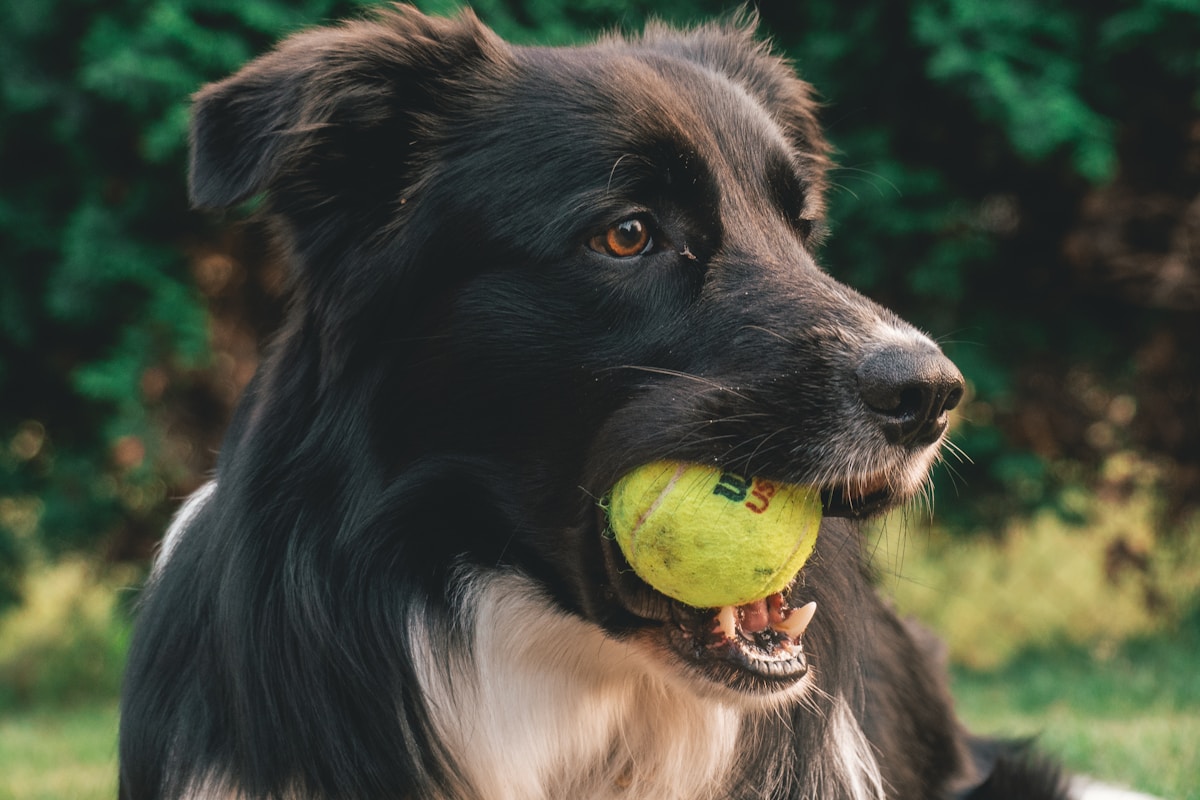
Every dog guardian has experienced this charming yet puzzling domestic ritual. You arrive home from a long day at work, and your canine companion greets you at the door with immense enthusiasm. Its tail wags in wide, fluid circles, its body wiggles with joy, and clutched firmly between its jaws is a prized possession: a squeaky plush duck, a well-chewed tennis ball, or a ragged rope bone. The dog walks directly over to you, gently presses the toy against your knee, and gazes up into your eyes with an expression of proud devotion.
Naturally, you smile, reach down to take the toy, and prepare to throw it for a game of living room fetch. The instant your fingers touch the fabric, your dog executes a sudden, deliberate maneuver: it clamps its jaws tightly shut, pulls its head backward, twists its torso away, or trots three steps out of reach, all while continuing to wag its tail. If you step toward the dog, it dances away; if you ignore it, it walks back and presses the toy against your leg again. To human logic, this behavior seems completely contradictory. Why would an animal repeatedly present an object to its human, only to vehemently refuse to surrender it or engage in play?
This widespread behavioral pattern, often termed the offering dilemma or the trophy display, is a masterclass in canine evolutionary psychology, emotional regulation, and inter-species miscommunication. Drawing on clinical ethology, cognitive studies published by the Association of Professional Dog Trainers, and animal behavior research documented by the American Kennel Club, this comprehensive guide examines the hidden science behind why dogs bring toys without intending to play, how human misunderstandings exacerbate the behavior, and how to read your dog’s genuine emotional intentions.
The Evolutionary Ethology of Toy Presentation: Why Dogs Carry Objects
To decode this behavior, human guardians must dismantle the fetch fallacy: the erroneous human assumption that whenever a dog holds an object, its primary desire is for a human to throw it. In the canine brain, carrying, presenting, and holding an item serves complex biological and social functions that have nothing to do with chasing a thrown toy.
1. Neoteny and Evolutionary Gift-Giving Rituals
Domestic canines exhibit neoteny, the evolutionary retention of juvenile physical and behavioral traits into adulthood. In ancestral wolf packs, adult canids returning to the den from a successful hunt carried pieces of food, bones, or fresh prey in their jaws to regurgitate or deliver to puppies and nursing females. This food-carrying behavior is a primal social bonding ritual that signifies pack safety, abundance, and communal care.
In our modern living rooms, domestic dogs rarely hunt wild game, but their ancestral neurological wiring remains active. When you walk through the front door after an absence, your dog experiences an instinctual surge to perform a welcoming retrieval ritual. In the absence of fresh hunting spoils, the dog substitutes its most prized personal treasures: its toys. Presenting the toy to you is an ancient declaration of pack solidarity and greeting appeasement.
2. The Oral Pacifier: Sensory Gating and Motor Calming
Greeting a beloved human is an intensely arousing event. When you return home, your dog’s sympathetic nervous system experiences a massive release of adrenaline and dopamine. For many dogs, this tidal wave of arousal is emotionally overwhelming, triggering an urgent desire to run, jump, whine, and mouth human hands.
Grabbing a toy functions as a neurological pacifier. The physical act of clamping its jaws around a soft, yielding object stimulates pressure mechanoreceptors in the periodontal ligament and masseter muscles, sending inhibitory parasympathetic signals to the brainstem. Holding a toy in its mouth provides sensory grounding, helping the dog regulate its own internal excitement and preventing inappropriate mouthing, jumping, or nip-biting. When the dog presses the toy against your leg, it is not saying, throw this; it is saying, holding this helps me keep my emotional composure while I greet you.
3. The Trophy Display and Social Pride
In canine social dynamics, carrying a valuable item enhances an individual’s perceived status within the group. When a dog prances around the living room with a squeaky toy held high, neck arched and tail waving like a banner, it is engaged in a trophy display. The dog wants you to gaze upon its prize, marvel at its ownership, and acknowledge its accomplishment. Surrendering the object to you would terminate the exhibition; the dog simply wants an admiring audience, not a game of fetch.
Neurobiology of Arousal, Possession, and Dopamine Loops
Understanding the chemical mechanics of the canine brain explains why dogs find holding an object while keeping it away from humans so intrinsically rewarding.
1. The Dopamine Loop of Anticipation
Dopamine is not the hormone of pleasure; it is the hormone of anticipation, motivation, and pursuit. When your dog presents a toy and you reach for it, a game of micro-keep-away begins. The split-second evasive maneuver, darting backward just as human fingers graze the toy, triggers an instantaneous dopamine spike in the canine nucleus accumbens. The game is not fetch; the game is possession management. By presenting the toy close enough to tempt you, but retreating fast enough to prevent capture, the dog creates an exciting, self-reinforcing game that it finds far more stimulating than watching a ball fly across the room.
2. Bite Inhibition and Mouth Occupancy
Many young dogs, particularly retrievers, herding breeds, and terriers, possess high natural oral drive. When greeting humans, their instinctual reflex is to interact with their mouth. However, adult dogs that have been taught that human skin is fragile face an internal conflict: they want to mouth and touch you, but they know biting skin is prohibited. Grabbing a toy solves this moral dilemma. By filling its mouth with a plush squeaker, the dog can safely press against you, lean its face against your knees, and express physical intimacy without any risk of accidental tooth-on-skin contact.
Behavioral intervention frameworks approved by the International Association of Animal Behavior Consultants (IAABC) focus on systematic desensitization, low-stress handling, and positive environmental modification.
Resource Guarding versus Benevolent Sharing: Reading the Critical Nuances
While most toy presentations are completely benign expressions of joy or playfulness, guardians must be able to distinguish friendly keep-away from developing clinical resource guarding.
1. The Fluidity of Movement
The single most reliable indicator of playful intent is bodily fluidity. In friendly keep-away or greeting pacification, the dog’s spine is soft and curvy, its joints are loose and springy, its mouth is relaxed around the toy, and its eyes are soft with visible blinking. If the dog pulls away as you reach, it does so with a playful, teasing hop.
By contrast, resource guarding is characterized by sudden, rigid immobility. As your hand approaches the toy, the dog’s body freezes. Its head lowers over the object, its jaw clamps with crushing force, its breathing ceases, and its eyes widen into a fixed, unblinking hard stare or whale eye (where the white sclera of the eye is visible). This physiological freeze is a clear warning that the dog perceives your hand as a predator attempting to steal a vital resource.
2. The Catastrophic Human Mistake: Forceful Extraction
When an owner sees their dog holding a toy and refusing to release it, an unfortunate human instinct is to grab the toy, pry the dog’s jaws open, or scold the animal with commands like: Give it to me! I am the boss! This forceful extraction is disastrous. To the dog’s brain, you have just validated its worst evolutionary fears: humans are unpredictable thieves who steal treasures by force. Each time you forcefully pry an object from a dog’s mouth, you escalate its anxiety, eroding trust and transforming harmless keep-away into aggressive resource guarding.
The Human-Canine Communication Gap: How to Respond Correctly
Once you understand that your dog is not necessarily asking for a game of fetch, you can adjust your response to match its genuine emotional needs.
1. The Admiration Protocol: Praise Without Reaching
When your dog trots up to you with a toy, wiggling with joy and pressing it against your knee, resist the reflex to grab the object. Instead, practice the Admiration Protocol:
- Keep your hands relaxed and still. Look at the dog with soft eyes and deliver warm, enthusiastic verbal praise: What a wonderful duck! Look at your amazing treasure! You are such a good dog!
- Pet your dog on its chest, shoulders, or the base of its neck, avoiding reaching toward its mouth or the toy itself.
- Allow the dog to stand proudly beside you, holding its prize while enjoying your physical affection. In ninety percent of cases, after thirty seconds of admiring acknowledgment, the dog’s arousal normalizes, its jaw relaxes, and it naturally drops the toy on the rug on its own accord.
2. The Two-Toy Switch Protocol for Playful Keep-Away
If your dog genuinely desires an interactive game but prefers chasing over surrendering, never chase the dog. Canines are quadrupeds with a lower center of gravity; you will never outmaneuver a dog playing keep-away in a living room, and chasing it merely rewards the evasive behavior.
- Acquire two identical high-value toys, such as two squeaky rubber balls or two plush tug ropes.
- When your dog presents Toy A and dances out of reach, completely ignore Toy A. Pull Toy B out of your pocket or behind your back, make it squeak with high excitement, and bounce it enthusiastically on the floor.
- Canines cannot resist moving prey. As soon as the dog drops Toy A to sprint toward the animated Toy B, mark the release with a verbal cue like yes, throw Toy B across the room, and quietly pick up Toy A. This teaches the dog that releasing an item is the trigger that initiates the next thrilling game.
According to clinical pathology references published in the Merck Veterinary Manual, early identification of underlying physiological changes provides the highest probability of positive long-term therapeutic outcomes.
The Scientific Trade Protocol: Conditioning Reliable Releases
Teaching a dog a bulletproof verbal drop cue without conflict requires classical and operant counter-conditioning certified by the American Veterinary Medical Association. The goal is to teach the dog that opening its jaws never results in a net loss; it always results in an upgraded reward.
Follow this step-by-step training blueprint:
- The Low-Value Exchange: Begin with an object of modest value, such as an ordinary rubber chew ring. While the dog holds the ring, hold a piece of high-value cooked roast beef or liver directly in front of the dog’s nose.
- The Biological Trade Reflex: Because a canine cannot physically inhale the scent of roast beef without opening its mouth, the dog will instinctively release the rubber ring to take the meat. The instant the ring hits the floor, say drop or trade, allow the dog to consume the meat treat, and immediately hand the rubber ring right back to the dog.
- Extinguishing Scarcity Mindset: By consistently returning the original toy after delivering the treat, you dismantle the dog’s scarcity anxiety. The dog learns: Releasing my toy does not mean I lose it; it means I get delicious meat and then I get my toy back immediately. Within two weeks of daily practice, your dog will happily drop any object upon verbal cue in joyful anticipation of the exchange.
Cognitive and Emotional Enrichment for Toy-Oriented Breeds
Dogs that exhibit intense toy-carrying behaviors often possess unfulfilled working drives that demand structured mental outlets.
Implement these cognitive enrichment strategies:
- The Named Toy Retrieval Game: Capitalize on your dog’s oral carrying drive by teaching it the names of its toys. Begin with two visually distinct toys, such as ball and rope. Practice asking for each item by name, rewarding correct identification with high-value treats. Brilliant working breeds like Golden Retrievers and Border Collies can learn vocabularies of dozens of unique toy names, channeling oral energy into focused problem-solving.
- The Tidy Up Chore: Teach your dog to clean up its own toys. Place a wide storage basket in the living room. Prompt your dog to pick up a toy, lure it over to the basket with a treat, cue drop directly over the basket opening, and reward generously when the toy lands inside. This transforms a chaotic floor into an engaging cooperative family activity.
- Decompression Chewing Stations: If your dog holds toys because of persistent domestic anxiety, provide appropriate long-lasting chew outlets. Natural beef collagen chews, safe rubber KONGs filled with frozen wet food, and split elk antlers provide hours of soothing masticatory exercise, releasing calming serotonin into the canine brain.
The Breed Spectrum of Oral Fixation and Toy Carrying
While dogs of all genetic backgrounds can exhibit toy presentation rituals, selective breeding over hundreds of years has intensified oral holding patterns in specific canine functional groups.
1. Retrievers and Waterfowl Specialists
Breeds like the Golden Retriever, Labrador Retriever, Flat-Coated Retriever, and Nova Scotia Duck Tolling Retriever were selectively bred for an uncommon neurological trait known as a soft mouth. In historical hunting scenarios, these dogs were tasked with swimming through freezing water, gently picking up fallen birds, and carrying them undamaged for miles back to human hunters. This selective breeding created an intensely pleasurable dopamine surge whenever a retriever holds a soft object in its jaws. In domestic homes, this genetic drive manifests as an uncontrollable urge to locate and hold a plush toy, slipper, or throw pillow the moment a family member arrives.
2. Herding Breeds and Motion Fixation
Border Collies, Australian Shepherds, and Belgian Malinois possess an amplified predatory eye-stalk-chase sequence. In the absence of livestock to herd and manage, these brilliant working canines often transfer their intense motor drive onto toys. For a herding dog, presenting a ball is often a test of human reaction time. The dog drops the ball three inches from your foot, watching your hand with laser-focused intensity. The moment your muscles tense to reach, the dog snaps the ball away, finding profound cognitive satisfaction in outmaneuvering human reflexes.
3. Terriers and High-Grip Possessiveness
Terriers were developed to dispatch subterranean quarry like badgers and foxes. Their jaw mechanics and neural wiring prioritize tenacity, high bite force, and possessive tenure. When a terrier presents a rope toy, it is rarely an invitation for gentle fetch; it is an invitation for vigorous, high-resistance tugging. Terriers take immense pride in demonstrating their grip strength, and attempting to take a toy by force often triggers fierce, vocal play-growls that inexperienced owners mistake for genuine hostility.
The Neuro-Endocrine Chemistry of Shared Toy Rituals
The interactions that unfold around a presented toy trigger profound hormonal and neurochemical changes in both the canine and human nervous systems.
Consider the physiological cascade that accompanies this daily domestic ritual:
- The Mutual Oxytocin Feedback Loop: Landmark neuro-biological studies conducted at Azabu University in Japan demonstrated that when a dog presents an object to its human and engages in gentle mutual eye contact, circulating oxytocin (the bonding and trust hormone) surges in both the canine and human bloodstreams. This reciprocal neurochemical release mirrors the biological bonding mechanism between human mothers and nursing infants, solidifying deep emotional attachment.
- Cortisol Attenuation through Mastication: When an over-aroused dog clamps its jaws onto a toy upon greeting its owner, the rhythmic pressure on its jaw muscles triggers the trigeminal nerve to stimulate parasympathetic pathways. This process significantly lowers circulating cortisol and adrenaline, helping the dog transition from frantic greeting arousal into calm, social stability.
Toy Material Toxicology and Gastrointestinal Foreign Body Safety
While toys provide vital emotional and mental enrichment, poorly manufactured or inappropriate toys present grave veterinary medical hazards.
Observe these essential toy safety guidelines:
- The Danger of Linear Rope Foreign Bodies: Heavy cotton rope toys are popular for tug-of-war, but they are among the most dangerous items in multi-pet homes. When dogs chew on ropes, they ingest individual frayed cotton threads. In the gastrointestinal tract, these long threads act as linear foreign bodies. One end becomes anchored in the stomach while peristalsis pulls the other end through the intestines, causing the delicate bowel to bunch up like an accordion (intestinal plication) and cutting through the intestinal wall, causing fatal septic peritonitis. Inspect rope toys daily and discard them as soon as fraying begins.
- Ball Diameter and Asphyxiation Physics: Never give a medium or large dog a ball that can fit completely behind its rear molars. Smooth tennis balls and rubber balls that are too small can easily compress under strong jaw pressure, slip down the pharynx, and lodge firmly over the trachea, causing complete airway obstruction and fatal asphyxiation within four minutes. Always choose balls with a diameter significantly larger than your dog’s mouth width, or select toys equipped with central safety air holes.
- Chemical Toxicity and Phthalate Screening: Inexpensive imported pet toys frequently contain high concentrations of industrial plasticizers (ortho-phthalates), bisphenol-A (BPA), and toxic heavy metals like lead and cadmium to keep vinyl soft and flexible. Over time, canine saliva and acidic gastric juices leach these endocrine-disrupting chemicals into the dog’s bloodstream. Choose toys manufactured from 100 percent natural, food-grade rubber, FDA-compliant silicone, or non-toxic certified organic cotton.
The Science of Scent Imprinting and Olfactory Attachment to Toys
Human guardians evaluate dog toys primarily by visual appearance, color, and texture. Canines evaluate their toys almost exclusively through an olfactory dimension. Over weeks and months of carrying, chewing, and sleeping beside a specific plush item, the fabric becomes deeply saturated with an intricate olfactory cocktail consisting of the dog’s saliva enzymes, glandular facial pheromones, household dust, and human skin lipids.
To your dog, this weathered, ragged toy is an irreplaceable biological scent repository. It carries the chemical signature of home, safety, and pack security. When an over-aroused or stressed dog seeks comfort, holding this familiar scent signature in its mouth activates olfactory pathways connected directly to the limbic system, lowering heart rate and promoting emotional equilibrium. This is precisely why washing a beloved dog toy in scented laundry detergent often causes distress; stripping away the accumulated pheromone signature leaves the dog feeling as if its cherished comfort object was destroyed and replaced with a sterile stranger.
Clinical Perspectives: When Toy Behaviors Indicate Underlying Medical Issues
In certain circumstances, obsessive toy carrying or sudden changes in toy interactions can be the earliest behavioral indicator of physical pain or systemic illness. Veterinary clinicians recommend a thorough physical examination if an adult dog exhibits any of the following patterns:
- Sudden Reluctance to Hold Toys: If a dog that previously loved carrying toys suddenly drops them, whines when picking them up, or refuses to close its jaws around soft objects, the primary differential diagnosis is oral pain. Conditions such as fractured premolars, severe gingivitis, tooth root abscesses, temporomandibular joint (TMJ) arthritis, or masticatory muscle myositis cause acute pain whenever jaw pressure is applied.
- Compulsive Pacing and Inability to Settle: A dog that paces frantically from room to room with a toy, panting heavily and unable to lie down, may be suffering from acute abdominal pain, spinal discomfort, or gastrointestinal distress. The toy in this context serves as an ineffective coping mechanism for somatic discomfort.
- Compulsive Sucking and Flank Sucking Syndrome: Certain breeds, most notably Doberman Pinschers, can develop compulsive disorders where they suck rhythmically on plush toys or their own flanks for hours every day. This behavior involves altered dopamine and serotonin receptor density in the basal ganglia and frequently requires environmental modification combined with veterinary pharmaceutical support.
Neurobiology of Possessive Display: Dopaminergic Loops in Keep-Away Behaviors
When a dog brings a toy within inches of an owner only to dodge away upon reach, the behavior is powered by a powerful dopaminergic reward loop. Canine ethologists categorize this display not as defiance, but as an invitation to engage in cooperative predatory keep-away games where chase dynamics deliver intense mental stimulation.
Every time a human lunges toward the toy and misses, the canine experiences an exhilarating confirmation of its agility and social engagement. Understanding this neurobiological reward mechanism allows handlers to redirect possessive energy into structured fetch and release protocols without frustration.
Prey Retrieval Interruption: The Predatory Motor Sequence in Ball-Obsessed Canines
The ancestral predatory motor sequence encompasses orienting, stalking, chasing, grabbing, and dissecting prey. Selective breeding in retrievers and herding dogs truncated this sequence, accentuating the chase and grab while suppressing consumption. However, the release phase requires deliberate positive conditioning because holding high-value objects satisfies primitive possession instincts.
Forcing toys from a dog jaws triggers jaw-clenching resistance and can inadvertently escalate into defensive resource guarding. Handlers must respect the underlying predatory sequence and substitute competitive force with positive reinforcement exchange protocols.
Cooperative Barter Protocols: Extinguishing Chase Rebound through Dual-Toy Systems
The most reliable clinical technique for teaching effortless object release is the dual-toy barter protocol. By introducing a secondary, identical high-value toy and initiating an energetic animated motion away from the dog, the handler shifts the canine focus from defending the primary toy to pursuing the active secondary target.
The exact moment the canine drops the initial toy to engage with the moving replacement, the handler marks the release with a clear verbal cue and immediately rewards the action. Over repeated repetitions, releasing objects becomes an automatic precursor to renewed play rather than an end to the fun.
Handler Body Language: De-escalating Guarding Arousal through Postural Neutrality
Human posture directly influences canine defensive arousal during interactive play. Direct frontal approaches, looming overhead angles, and prolonged direct eye contact communicate confrontation, prompting the dog to clamp down firmly on its prized possession.
Adopting a sideways stance, lowering eye gaze, and taking three deliberate steps backward transforms human body language into an invitation. This posture communicates non-threatening intentions, encouraging the canine to voluntarily deposit the toy at the handlers feet.
Canine Play Ethology: Cooperative Fetch Conditioning and Trust-Based Object Exchange
Transforming stubborn keep-away antics into enthusiastic cooperative play begins with honoring the dog innate joy in social chase and possession. When owners eliminate forceful grabbing and instead offer high-value barter rewards, the canine learns that releasing a prized toy initiates another thrilling round of engagement rather than an abrupt termination of fun.
Practicing short, positive training sessions using dual identical balls or tug ropes conditions an automatic release response. Fostering clear communication and mutual trust during interactive play deepens the human-canine bond while reinforcing reliable household impulse control.
The comparative evaluation table detailed below highlights the essential behavioral distinctions between healthy cooperative play and emerging possession defensiveness. Understanding these subtle communication cues empowers handlers to respond with calm guidance rather than confrontational grabbing.
Diagnostic Comparison Matrix: The 6 Motivations Behind Toy Presentation
This table compares the primary underlying motivations when a dog presents a toy but refuses to surrender it:
| Behavioral Category | Core Emotional Motivation | Accompanying Body Language | Reaction When Reached For | Resource Guarding Risk | Recommended Human Action |
|---|---|---|---|---|---|
| Greeting Pacifier | Arousal self-regulation | Wiggling spine, soft eyes, gentle wag | Turns head away gently without tension | Zero (Pure appeasement) | Stroke chest; admire without taking |
| Trophy Display | Social pride and exhibition | High head, arched neck, proud prancing | Parades around you out of reach | Zero (Exhibition only) | Praise verbally; do not grab |
| Playful Keep-Away | Dopamine-driven chase game | Play bows, bouncy steps, playful eyes | Darts back 3 feet, invites chase | Very low (Playful game) | Initiate alternative chase with a second toy |
| Oral Displacement | Anxiety and sensory grounding | Rapid pacing, panting, ears pinned | Tight grip, avoids direct eye contact | Low (Stress-driven) | Create calm, quiet environment |
| Attention-Seeking | Operant human manipulation | Nudging knee, whines, expectant gaze | Drops toy near feet, grabs if moved | Low to moderate | Ask for basic trick before interaction |
| Mild Possession Guarding | Insecurity over resource loss | Stiff body, hard stare, closed mouth | Freezes or growls softly if reached for | High (Clinical guarding) | Practice positive trade protocol only |
By referencing the behavioral metrics established in the matrix above, handlers can systematically extinguish keep-away tendencies while preserving their dog natural enthusiasm for fetch. The following frequently asked questions address the most urgent practical questions guardians encounter when managing possessive toy games.
Frequently Asked Questions (FAQs)
Why does my dog whine while walking around with a toy in its mouth?
Whining while holding a toy is a classic sign of high emotional arousal and sensory conflict. The dog is experiencing an overwhelming urge to do something with the prized object, but cannot decide whether to hide it, bury it, guard it, or present it to you. This behavior is especially common in female dogs experiencing false pregnancies (pseudopregnancy), where maternal hormones drive the dog to treat plush toys like vulnerable puppies, pacing and whining in search of a safe nesting den.
Is it okay to play tug-of-war with a dog that brings me toys?
Yes, tug-of-war is a fantastic, healthy game that builds human-canine bonds and drains excess metabolic energy, provided it is played with clear rules. The game must begin only on your verbal invitation, and the dog must immediately release the toy upon your verbal drop cue. If the dog’s teeth accidentally touch human skin or clothing, the game ends immediately for thirty seconds. Tug-of-war does not cause aggression; it teaches high-level emotional self-control under intense arousal.
Why does my dog bury its toys under living room couch cushions or blankets?
Caching or burying items is an ancient survival instinct inherited from wild ancestors who buried surplus meat in subterranean cache pits to protect it from scavengers and preserve it for times of famine. In modern domestic canines, burying a high-value toy or chew bone under couch cushions or between bed pillows indicates the dog considers the item exceptionally precious and wants to secure it in a safe location for future enjoyment.
What should I do if my dog growls when I try to take a toy it brought to me?
Never yell at, punish, or physically correct a dog for growling. A growl is a vital communication signal that says: I feel anxious and need space. If you punish a growl, you remove the dog’s warning system, increasing the likelihood of a silent, unexpected bite in the future. Immediately freeze, remove your hands, turn your body sideways, and step away. In the future, never reach directly for that toy; instead, use high-value treats to practice the scientific trade protocol.
Why do retrievers carry socks and shoes around the house without chewing them?
Retrievers, such as Golden Retrievers and Labradors, were selectively bred for centuries to possess soft mouths, meaning they can carry delicate waterfowl for miles without puncturing the skin with their teeth. In domestic households, socks and worn shoes carry intense concentrations of human scent pheromones. Carrying your shoe provides the retriever with a soothing olfactory connection to you, combined with instinctual satisfaction of its genetic urge to hold objects gently.
Can playing keep-away with toys encourage a dog to run away outdoors?
Yes. If you frequently chase your dog around the living room when it has a toy, the dog learns that running away from you is a thrilling, rewarding game. If the dog slips its collar or escapes through an open front door outside, it may instinctively run away from you, expecting you to chase it. Always teach your dog that bringing objects to you initiates fun, while running away results in boredom.
Why does my dog suddenly destroy a plush toy it carried gently for months?
Canine play sequences contain remnants of the predatory hunting chain: search, stalk, chase, catch, bite, and dissect. A dog may carry a plush toy gently for weeks as an appeasement pacifier, but if an accidental rip exposes the internal polyester stuffing or squeaker, the visual and acoustic change can suddenly trigger the dissecting phase of the predatory sequence. The dog instinctively shifts from holding to disemboweling the toy to extract the squeaker.
How do I know if my dog’s toy is safe for vigorous chewing?
Practice the thumbnail test recommended by veterinary dentists: press your thumbnail firmly into the surface of the toy. If the material does not yield or show a temporary indentation, it is too hard and can fracture canine premolars and carnassial teeth. Avoid real animal hooves, hard synthetic nylon bones, and cooked bones. Choose flexible natural rubber toys, durable pliable silicone, or certified dental chews.
Why does my dog bring me a toy only when guests enter the house?
The arrival of guests creates an immense spike in household environmental energy. Unfamiliar voices, doorbells, and bustling movement elevate your dog’s stress and excitement. Bringing a toy allows the dog to channel that intense energy into an appropriate oral outlet, preventing it from jumping on guests or barking frantically. Encourage guests to admire the dog’s toy calmly without trying to snatch it.
Can a puppy learn the drop command using clicker training?
Yes, clicker training is exceptionally effective for conditioning a fast, reliable release. When the puppy holds an object and you present a treat, click the exact split-second the puppy’s jaws open and the toy leaves its mouth, followed immediately by delivering the treat. The precise acoustic marker of the clicker bridges the cognitive gap, helping the puppy understand that opening its jaws is the exact behavior that earns the reward.
The Definitive Blueprint for Understanding Canine Offerings
The next time your dog greets you with a wiggling body, sparkling eyes, and a prized toy clamped gently between its jaws, pause before reaching out to grab it. Recognize that this moment is not an invitation to a competitive struggle, nor is it necessarily a request for a high-cardio game of fetch. It is a profound, ancient communication: a declaration of welcoming love, an act of emotional self-regulation, and a proud presentation of the finest treasure in your dog’s world.
By admiring the offering without snatching, honoring your dog’s emotional pacing, practicing the scientific trade protocol, and providing structured outlets for oral enrichment, you replace confusion with deep mutual understanding. With patience, respect, and compassionate observation, you will forge an unbreakable bond of trust with your canine companion, transforming everyday domestic rituals into cherished moments of shared joy and connection.
Every shared interaction between a dog and its human guardian is a conversation built across millions of years of evolutionary divergence. When we learn to listen to the subtle dialects of body language, jaw tension, and emotional pacing, we honor the extraordinary emotional intelligence of the animals who share our homes. Respect your dog’s offering, celebrate its playful spirit, and enjoy the quiet wonder of unconditional canine companionship.

Leave a Comment