

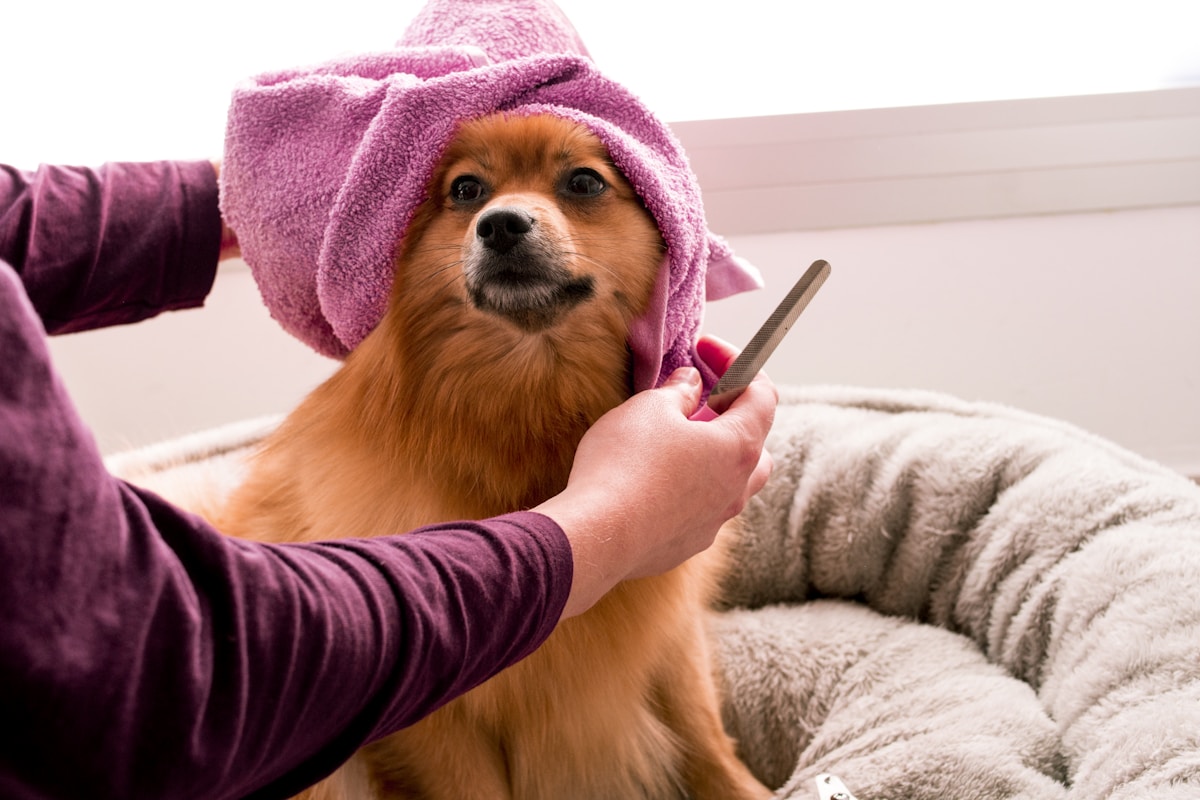
For devoted guardians of long-haired and double-coated canines, running your fingers through a companion’s lustrous, silky coat is one of the most pleasurable tactile rituals of pet ownership. You admire the graceful feathering of their legs, the flowing curtain of their chest frills, and the velvety softness of their crown. Yet, as your fingers glide gently behind the base of their ears, your soothing stroke comes to an abrupt, jarring halt. Your fingertips encounter a hard, dense, compacted knot of hair cemented flush against the delicate cranial skin. To human touch, the clump feels less like fur and more like a dense wad of felted wool or solid cardboard.
Discovering severe mats behind a dog’s ears is an almost universal experience for owners of drop-eared and long-coated breeds: including Golden Retrievers, Cavalier King Charles Spaniels, Cocker Spaniels, Setters, Australian Shepherds, and Poodle crosses. Because this retroauricular region is tucked quietly beneath the hanging pinnae, mats form silently out of sight, expanding with astonishing speed. An area that felt completely soft and silky on Friday can transform into a tight, strangulating knot by Monday afternoon. Frustrated owners often view these knots as a personal grooming failure or an annoying aesthetic blemish. Veterinary dermatologists and professional master groomers, however, recognize that ear mats represent a severe, painful soft-tissue hazard.
Left unmanaged, retroauricular mats exert continuous mechanical traction on the paper-thin skin behind the ear, cutting off microvascular circulation, causing excruciating burning discomfort, and creating an ideal dark incubator for moisture-loving bacteria, yeast colonies, and external parasites. Furthermore, well-meaning owners who attempt to cut these mats out with household kitchen scissors commit one of the most common and catastrophic grooming errors in pet care: accidentally slicing off hidden flaps of tented ear skin. Safe, pain-free mat removal demands an understanding of canine pilosebaceous anatomy, hair shaft physics, professional tool mechanics, and gentle friction-free dematting protocols.
Drawing on clinical veterinary dermatology standards, surgical wound management research from the American Veterinary Medical Association (AVMA), professional grooming guidelines from the American Kennel Club (AKC), and soft-tissue injury protocols from VCA Animal Hospitals, this definitive clinical manual provides an exhaustive guide to safely dismantling ear mats, preventing friction knots, and protecting your companion’s delicate skin throughout their life.
Anatomy of Retroauricular Canine Fur: Why Ear Mats Form So Fast
To understand why mats form behind the ears with such relentless frequency, one must first explore the unique micro-anatomy of the canine retroauricular region. The fur and skin behind a dog’s ears diverge significantly from the coat found across the rest of the body.
1. Ultra-Fine Hair Morphology: The Undercoat Trap
The fur located immediately behind and beneath the base of the ear pinna consists almost entirely of secondary undercoat hairs. Unlike the thick, stiff, medullated guard hairs that shield the dog’s back, these secondary hairs are microscopic in diameter, non-medullated, and exceptionally soft and wavy. The outer surface of each hair shaft is covered in microscopic, overlapping keratin scales called cuticles. When the hair is clean and aligned, these scales lie flat, allowing strands to glide past one another effortlessly.
2. The Friction Multiplier: Anatomy in Motion
The retroauricular pocket is subject to more continuous mechanical friction than virtually any other area of the canine body. Consider the daily physical movements that affect this zone:
- Head Shaking and Ear Flapping: When a dog shakes its head, the heavy ear pinnae whip back and forth, rubbing vigorously against the retroauricular fur dozens of times per day.
- Hind-Leg Scratching: When a dog scratches its ear with a rear foot, sharp digital claws rake through the fine undercoat, crushing hair shafts together and creating chaotic tangled knots.
- Collar and Harness Strap Chafing: Flat nylon or leather collars sit directly beneath the ear base. Every time the dog walks, pulls on a leash, or turns its head, the collar strap grinds against the retroauricular fur, acting like a felting loom that compacts loose hairs into dense knots.
- Affectionate Human Petting: Humans naturally gravitate toward scratching dogs behind their ears. The circular, friction-heavy motion of human fingers inadvertently compresses fine undercoat hairs together.
3. Glandular Sebum and Moisture Trapping
The skin at the base of the ear canal is heavily populated with ceruminous glands (specialized apocrine glands) and sebaceous glands that produce waxy secretions and lipids. Furthermore, when dogs drink water, splash in puddles, or play in rain, moisture wicks along the ear margins and settles into the warm pocket behind the ear. This stagnant moisture combines with waxy sebum to act as biological glue, cementing shed hairs to living shafts and accelerating the felting process within hours.
The Physics of Matting: Why Water Makes Ear Mats Worse
One of the most widespread and catastrophic mistakes made by pet owners is washing a dog that has mats behind its ears, believing that warm water and shampoo will loosen the knots. In physical reality, wetting a matted coat achieves the exact opposite: it turns a manageable tangle into an impenetrable, rock-hard felted cast.
1. The Keratin Swelling and Scale-Interlocking Mechanism
Hair is composed of fibrous keratin proteins. When keratin absorbs water, the hair shaft swells up to twenty percent in diameter, causing the microscopic cuticle scales on the surface of each strand to flare outward like pine cones. In a loose, brushed coat, this swelling is harmless. However, inside a tangle, these flared cuticle scales interlock with neighboring strands like microscopic Velcro hooks.
2. Desiccation Shrinkage and Compaction
As the bathwater evaporates from the matted hair mass, the interlocking hairs dry and contract. The shrinking fibers pull together with immense physical tension, shrinking the overall volume of the knot and pulling it tighter against the skin. A mat that was half an inch away from the skin before the bath becomes pulled directly against the epidermis afterward, forming a suffocating felted shield that cannot be combed through without tearing tissue.
Clinical standards established by the American Animal Hospital Association (AAHA) emphasize the necessity of structured diagnostic evaluations and routine monitoring protocols.
Pathological Risks of Severe Retroauricular Mats
Far from being a mere cosmetic annoyance, chronic mats behind the ears cause severe clinical medical complications that compromise canine health and welfare.
1. Cutaneous Strangulation and Microvascular Ischemia
As an ear mat tightens, it continuously recruits neighboring living hairs into its matrix. Because hair grows at different rates and angles, the expanding mat exerts severe, unyielding traction on thousands of hair follicles simultaneously. The skin beneath the mat is pulled upward into the knot: a phenomenon known in veterinary medicine as skin tenting. This constant mechanical traction pinches dermal capillary beds, producing localized tissue ischemia (loss of blood circulation), excruciating burning pain, and eventually localized skin necrosis (tissue death).
2. Acute Moist Dermatitis (Hot Spots) and Fungal Blooms
A dense felted mat acts as an airtight, moisture-trapping blanket sealed against the warm skin. Natural sweat, environmental humidity, and ear discharge become trapped beneath the felt. Deprived of oxygen, the warm, moist epidermal surface becomes an ideal biological incubator. Commensal bacteria (Staphylococcus pseudintermedius) and lipophilic yeast (Malassezia pachydermatis) multiply explosively, breaking down the skin barrier within 24 to 48 hours. The skin transforms into an intensely painful, raw, weeping, ulcerated wound known as an acute hot spot, emitting a foul, putrid odor.
3. Pinnal Hematomas from Violent Secondary Flapping
Because the skin beneath an ear mat is perpetually itchy, burning, and tight, the dog experiences intense neurological distress. To relieve this agonizing sensation, the dog shakes its head with violent, repetitive force. The centrifugal kinetic force of the heavy ear pinna slapping against the skull fractures delicate capillary blood vessels inside the ear cartilage. Blood fills the dead space between the skin and cartilage, forming a massive, balloon-like, agonizing swelling known as an aural pinnal hematoma, which requires surgical drainage and suturing under general anesthesia.
4. Concealed Parasitic Reservoirs
The dark, impenetrable crevice beneath a dense ear mat provides an ideal sanctuary for external parasites. Deer ticks, brown dog ticks, and fleas crawl beneath the mat where they can feed on canine blood completely undisturbed by human brushing or visual inspection. By the time the mat is removed, multiple engorged ticks may have transmitted dangerous tick-borne pathogens: such as Lyme disease or Anaplasmosis: directly into the dog’s bloodstream.
The Fatal Mistake: The Scissor Tenting Hazard
Every veterinary emergency hospital routinely treats dogs suffering from horrific ear lacerations caused by well-meaning owners attempting to cut mats out with scissors. Understanding why this injury occurs is the single most important safety lesson in home canine grooming.
1. The Skin Tenting Phenomenon
When an ear mat tightens, it pulls the loose, elastic skin behind the ear upward into the core of the knot. Because the fur is opaque and tangled, the tented peak of living, vascular skin becomes completely hidden inside the center of the mat. An owner holding a pair of kitchen scissors slides the blades underneath the knot, believing they are cutting purely dead hair. In reality, the blades slice directly through the tented cone of living skin.
2. Catastrophic Pinnal and Web Lacerations
A single snip of the scissors can amputate a piece of the dog’s ear margin, sever the caudal auricular artery, or open a gaping three-inch laceration across the neck. The animal screams in terror, thrashing violently as arterial blood sprays across the room. These injuries require emergency surgical debridement, multi-layer dermal suturing, drain placement, and weeks of painful recovery in an Elizabethan collar. Household scissors must NEVER be used to remove mats from behind a dog’s ears.
Health certification guidelines from the Orthopedic Foundation for Animals (OFA) provide essential baseline data for evaluating structural soundness and hereditary predispositions.
Step-by-Step Clinical Protocol for Safe Retroauricular Dematting
To safely dismantle ear mats without causing pain, tearing hair, or endangering delicate skin, pet owners must execute this systematic six-step veterinary grooming protocol.
- Step 1: Tactile Palpation and Skin Anchoring: Gently lift the ear pinna forward and inspect the retroauricular pocket under bright lighting. Use your non-dominant thumb and forefinger to grasp the base of the hair shafts immediately beneath the mat, pressing firmly against the skin. By anchoring the hair roots with your fingers, you absorb all mechanical pulling tension, ensuring the dog feels zero painful traction on its skin during the dematting process.
- Step 2: Saturation with High-Slip Conditioning Serum: Never work on dry, brittle hair. Apply a generous amount of professional leave-on detangling spray or silicone-based conditioning serum containing dimethicone, marshmallow root extract, or argan oil directly into the core of the mat. Massage the serum into the knot with your fingers. The lubricating silicones coat the microscopic cuticle scales, allowing interlocking hair shafts to slide past each other smoothly.
- Step 3: Vertical Splitting with a Professional Mat Splitter: If the mat is dense and solid, a comb cannot pass through it without force. Use a specialized grooming mat splitter or dematting rake featuring curved, razor-sharp internal blades and blunt exterior tips. Holding the hair roots anchored firmly against the skin, insert the tool into the mat and draw it outward in short, gentle strokes parallel to the direction of hair growth. This slices the single dense clump into four or five smaller, narrow vertical ribbons without cutting across the coat.
- Step 4: Tip-to-Root Combing with a Greyhound Comb: Take a stainless steel greyhound comb and utilize the wide-tooth side. Begin combing at the very tips of the hair ribbons, picking out a few loose strands at a time. Never force the comb downward into the knot. Gradually work your way inward toward the skin millimeter by millimeter, gently teasing apart the fibers until the wide-tooth comb glides through from skin to tip with zero resistance.
- Step 5: Finishing with the Fine-Tooth Comb: Switch to the fine-tooth end of the greyhound comb. Run the teeth through the retroauricular coat down to the dermal surface. The fine teeth will extract the loose, shed dead undercoat hairs that originally formed the core of the mat, preventing them from felting together again.
- Step 6: Topical Skin Soothing and Barrier Fortification: Once the fur is completely tangle-free, inspect the underlying skin for redness or irritation. Apply a pea-sized amount of soothing veterinary hydrocortisone lotion, colloidal oatmeal balm, or ceramide mousse to calm any mild traction erythema and nourish the stratum corneum.
Tools and Equipment Architecture for Ear Mat Management
Having the correct professional tools on hand transforms dematting from a stressful battle into a safe, routine grooming exercise.
1. Essential Professional Tool Breakdown
- Solid Brass / Steel Greyhound Comb: The indispensable foundational tool. Steel pins machined with rounded tips penetrate to the skin without scratching, providing the tactile feedback needed to locate tiny snarls before they become mats.
- Curved Safety-Blade Mat Splitter: Features an enclosed razor edge nestled inside a curved metal hook with a blunt rounded nose that slides beneath knots safely, shielding skin from cuts.
- Professional Cordless Trimmer (Size 10 or 30 Blade): If a mat has formed a solid felted pelt flush against the skin, attempting to comb it out is inhumane. A quiet, low-vibration veterinary trimmer equipped with a safety blade effortlessly glides beneath the felted cast, removing it in seconds with zero pain.
- High-Slip Dematting Spray: Formulated with cosmetic-grade silicones and plant mucilage that dramatically reduce surface friction between hair shafts.
- Ergonomic Flexible Slicker Brush: Features fine, bent stainless steel pins that gently fluff and separate coat layers after combing.
2. Collar Engineering: Preventing Mechanical Friction
Standard flat nylon webbing collars are the number one cause of retroauricular matting in pet dogs. The wide, flat strap continuously rubs against the neck and ear base, acting like a mechanical felting machine. To prevent friction knots, transition your long-haired companion to a high-grade Rolled Leather Collar. The rounded cylindrical profile of rolled leather glides smoothly over fine fur without catching or compacting hairs, eliminating up to ninety percent of friction-induced ear mats.
Breed-Specific Retroauricular Coat Nuances
Different canine breeds possess distinct hair textures and ear conformations that influence their vulnerability to ear matting.
1. Drop-Eared Sporting Spaniels (Cocker, Cavalier, Springer)
Spaniels possess long, heavy, pendulous ears covered in profuse, silky feathering. The heavy leather traps moisture from drinking bowls and outdoor swimming. Because their fur is exceptionally fine and prone to rapid tangling, spaniels require daily thirty-second comb-outs behind each ear pinna.
2. Water-Loving Retrievers (Golden, Flat-Coated)
Golden Retrievers possess dense, water-repellent double coats with thick, woolly undercoats behind the ears. Frequent swimming followed by air drying accelerates felting dramatically. In Goldens, blow-drying the ear base with forced air after swimming is mandatory to prevent tight mildew-scented mats.
3. Doodles and Poodle Crossbreeds
Poodle crosses inherit an unpredictable mix of non-shedding curly hair and dense shedding undercoat. Shed hairs cannot fall to the ground; they become trapped inside surrounding curls, creating dense, felted mats behind the ears within days. Doodles require daily line combing down to the skin to prevent solid ear pelts.
Cellular Keratin Biochemistry and Cuticle Health Dynamics
To truly conquer chronic retroauricular matting, one must appreciate the microscopic biochemical architecture of canine hair. Hair is not living tissue; it is a specialized dead filament composed of structural fibrous proteins called alpha-keratins, bound together by rigid covalent disulfide cross-links and flexible hydrogen bonds.
1. The Alpha-Keratin Helix and Disulfide Stability
Each hair shaft consists of three concentric layers: the innermost central medulla, the thick intermediate cortex containing melanin pigment granules and tensile keratin fibrils, and the outermost protective cuticle. The cuticle is formed by five to ten overlapping layers of flat, scale-like cells. When the coat is healthy and well-nourished, these cuticle scales lie flush and smooth against the cortex, bonded by a natural lipid envelope rich in 18-methyleicosanoic acid (18-MEA). This thin lipid veneer imparts hydrophobicity, prevents water absorption, and allows individual hair strands to slide effortlessly past one another during head movements.
2. Electrostatic Charges and Seasonal Friction Felting
During dry autumn and winter months, indoor heating systems drastically reduce ambient domestic humidity. When a dog rests on synthetic polyester carpets, fleece blankets, or microfiber sofas, continuous movement strips electrons from the hair shafts, creating an intense positive electrostatic charge across the retroauricular coat. Because opposite charges attract, negatively charged dust particles and neighboring hair strands are drawn violently together. This electrostatic clinging brings hair cuticles into continuous abrasive contact, rapidly tangling the fine undercoat into impenetrable knots.
3. Lipid Emollients versus Cosmetic Silicones for Mat Prevention
Understanding the difference between biological plant oils and modern cosmetic silicones is vital for effective coat management:
- Cosmetic Volatile Silicones (Cyclopentasiloxane / Dimethicone): Form a microscopic, weightless hydrophobic shield over the hair shaft. Silicones smooth flared cuticles, neutralize static electricity, and dramatically lower the coefficient of friction without leaving an oily residue that attracts dirt.
- Plant-Derived Cold-Pressed Oils (Argan, Jojoba, Rosehip): Penetrate the porous hair cortex, replenishing lost lipids and fatty acids from within. However, heavy oils (like raw coconut oil) can attract particulate dust if applied excessively, acting as a grit magnet that accelerates mechanical tangling.
- Hydrolyzed Silk and Keratin Peptides: Microscopic protein fragments that fill microscopic fissures in damaged hair cuticles, restoring tensile strength and preventing hair breakage during comb-outs.
Behavioral Conditioning and Cooperative Care for Sensitive Ears
The retroauricular region is heavily innervated by sensory branches of the second and third cervical nerves alongside the great auricular nerve. When a dog has experienced painful mat pulling or accidental scissor snips in the past, touching their ears can trigger intense fear-based defensiveness.
1. The Chin Rest Foundation Behavior
Cooperative care transforms grooming from a physical restraint battle into a voluntary partnership. Teach your companion the foundational Chin Rest cue: training the dog to rest its chin comfortably in your open palm or across an upholstered stool. While the dog maintains the chin rest, it receives continuous high-value rewards (such as squeeze cheese or liver pate). If the dog lifts its chin, all grooming stops immediately. Giving the animal complete agency over the process dramatically lowers cortisol levels, allowing you to comb behind the ears with relaxed muscular compliance.
2. Progressive Desensitization to Grooming Tools
Introduce the metal greyhound comb systematically through low-intensity positive counter-conditioning:
- Day 1 to 3: Present the comb, allow the dog to sniff it, issue a verbal reward marker, and deliver a treat. Touch the flat back of the comb against the shoulder while treating.
- Day 4 to 7: Gently place the flat spine of the comb against the base of the ear for two seconds while feeding a lick mat. Remove the comb before the dog pulls away.
- Day 8 to 14: Lift the ear pinna with one hand, execute a single gentle comb stroke through the tips of the fur, and immediately deliver a jackpot treat. Gradually build up to multiple comb strokes per session.
Environmental and Lifestyle Friction Control in Long-Haired Breeds
Eliminating ear mats permanently requires engineering your dog’s daily environment to minimize the mechanical friction that sparks tangling.
1. Bedding Textiles and Friction Reduction
The fabric of your dog’s bedding exerts a massive influence on coat health. Traditional Sherpa fleece, corduroy, and rough canvas dog beds have high friction coefficients that catch fine ear fur during sleep. Replace fleece covers with high-density, smooth ripstop nylon or satin-lined orthopedic dog bed covers. Smooth textiles allow the dog’s head to glide effortlessly across the bed surface during nighttime repositioning, reducing friction matting by up to seventy percent.
2. Rainwear and Winter Apparel Considerations
When dressing long-haired canines in waterproof raincoats or winter thermal jackets, inspect the collar and neck design. Jackets featuring rough Velcro closures or tight, elasticized neck collars rub intensely against retroauricular fur during brisk walks. Choose outerwear featuring silky polyester inner linings and loose, adjustable cowl necks that shield the coat without compressing the hair shafts.
3. The Post-Rain 5-Minute Forced-Air Blowout
Never allow a long-haired dog to air-dry naturally after walking in rain or snow. Keep a portable high-velocity pet dryer or cool hairdryer in your mudroom. Spend three minutes gently blowing warm moisture out from the base of the ears, followed by thirty seconds of wide-tooth combing. Removing moisture before the cuticle scales interlock guarantees that mats never gain a foothold.
Friction Dynamics of Collar Straps on Fine Retroauricular Soft Fur
The fur located directly behind canine ears consists of ultra-fine, downy secondary hairs that possess minimal natural sebum lubrication. Constant friction from nylon collar straps, harness webbing, and frequent ear flapping causes these delicate strands to intertwine rapidly, forming dense, felted mats within days.
Guardians often fail to detect these retroauricular mats during surface petting because the dense matting hugs the skin closely behind the ear base. Switching to smooth rolled-leather collars or silk-lined gear significantly diminishes mechanical friction and preserves coat integrity in long-haired breeds.
Severe Aural Hematoma Risks from Forceful Dematting near Cartilage
Dematting tight tangles behind the ears requires extreme caution due to the delicate vascular anatomy of the pinna and retroauricular region. Yanking with slicker brushes or aggressive pulling exerts severe tension on thin skin, causing micro-vascular ruptures that can precipitate painful aural hematomas or skin tears.
Never insert kitchen scissors beneath a tight ear mat, as the flexible ear leather frequently folds invisibly into the core of the tangled fur, leading to catastrophic lacerations. Professional dematting rakes or safety splitters should be worked through the fur gradually from tip to base with fingers anchored beneath the hair root.
Enzymatic Spray Lubrication and Tapered Dematting Comb Ergonomics
Applying a silicone-based or marshmallow root enzymatic detangling spray saturates hair shafts, reducing friction coefficients and allowing individual strands to slide apart smoothly. Allowing the detangling solution to penetrate for several minutes softens keratin bonds before mechanical separation begins.
Using a high-quality stainless steel buttercomb with tapered teeth, handlers should tease apart the outer edges of the mat in tiny sections. Separating the tangle into smaller segments with fingers before combing through minimizes discomfort and preserves coat density.
Preventative Trimming and Silk-Lined Collar Solutions for Long-Coated Breeds
For dogs with persistent ear matting tendencies, requesting a subtle sanitary thinning trim from a professional groomer removes excessive downy undercoat without compromising the outer silhouette. This proactive trimming allows air to circulate around the ear canal, simultaneously reducing moisture accumulation and ear infection risks.
Establishing a daily sixty-second grooming ritual where handlers comb behind both ears while offering high-value rewards transforms dematting into a soothing bonding activity. Consistent preventative maintenance ensures mats never have the opportunity to solidify into painful dermal obstructions.
Retroauricular Coat Maintenance: Specialized Tools and Daily Prevention Rituals
Preventing painful mats behind the ears in long-coated breeds depends upon establishing a gentle sixty-second daily maintenance routine. Utilizing a dedicated steel buttercomb with fine and coarse tooth spacing, handlers should gently section the fur behind each pinna, combing smoothly from skin to tip while offering delicious treats.
Selecting lightweight rolled-leather collars or lined silk harnesses minimizes friction against fine retroauricular undercoat, eliminating the primary physical cause of tangling. Applying a light mist of silicone-based coat conditioner before brushing protects individual hair shafts from static cling and friction knotting.
Never attempt to remove stubborn ear mats using sharp household scissors, as hidden skin folds within the tangle can lead to severe accidental lacerations. Consistent preventative brushing ensures your long-haired companion maintains a gorgeous, tangle-free coat in complete comfort.
The specialized dematting comparison table below evaluates dematting tools, lubrication solutions, and preventative equipment designed to manage fine retroauricular coat tangling without compromising skin health.
Canine Pinna Anatomical Vulnerabilities: Gentle Handling Protocols for Sensitive Ears
The canine external pinna contains a dense network of delicate capillaries, cartilage folds, and sensitive sensory nerve endings that require gentle handling during dematting sessions. Forcing metal combs through tangled retroauricular undercoat transmits intense tensile strain directly to the aural cartilage, causing acute discomfort and ear sensitivity.
By supporting the base of the hair with fingertips while working combs through the outer tips, handlers isolate mechanical tension and protect underlying skin. Pairing patient, low-stress grooming sessions with high-value rewards fosters cooperative canine behavior and keeps ear grooming calm and tear-free.
Diagnostic Comparison Matrix: Dematting Methods and Clinical Safety
This table compares the primary methods utilized to remove retroauricular mats across clinical safety, pain levels, and tissue risk parameters:
| Dematting Technique | Clinical Safety Rating | Pain and Discomfort Index | Coat Preservation Level | Risk of Skin Laceration | Recommended Clinical Application |
|---|---|---|---|---|---|
| Line Combing with Slip Serum | Exceptional (Gold Standard) | Zero (Gentle separation) | Maximum (100 percent hair saved) | Zero (Blunt comb teeth) | Early to moderate knots; daily routine |
| Mat Splitting with Safety Blades | Very High (Professional) | Minimal (Anchored root grip) | High (Preserves 70 percent of coat) | Very Low (When skin is shielded) | Dense, firm knots that resist gentle combing |
| Surgical Shaving with Size 10 Blade | Exceptional (Safest for Pelts) | Zero (Instant pressure relief) | Low (Removes matted section) | Negligible (Safety clipper guard) | Solid felted casts pulled flush against skin |
| Dry Slicker Brush Scraping | Poor (Contraindicated) | Moderate to High (Skin burn) | Moderate (Breaks hair cuticles) | High (Acute slicker brush burn) | Never on delicate retroauricular skin |
| Manual Tearing / Pulling Apart | Dangerous (Strictly Prohibited) | Severe (Acute traction agony) | Low (Snaps hair shafts) | High (Tears epidermal surface) | Never; causes fear reactivity and trauma |
| Household Scissor Cutting | Extremely Hazardous | Extreme (Severe trauma risk) | Variable | Catastrophic (Skin tenting lacerations) | Strictly prohibited by all veterinary boards |
Adhering to the gentle dematting techniques and tool selections detailed in the comparative matrix above preserves coat beauty and ensures complete canine comfort. Browse the frequently asked questions below for expert guidance on managing delicate ear fur.
Veterinary dermatologists emphasize that consistent preventative brushing behind the pinnae prevents severe skin tears and hematomas. Dedicating two minutes daily to gentle comb maintenance protects your companion delicate ear leather and ensures a lifetime of pain-free grooming comfort.
Frequently Asked Questions About Dog Ear Mats
Why do mats form behind my dog’s ears so much faster than anywhere else on its body?
The fur behind the ears consists of ultra-fine, wavy secondary undercoat hairs that lack protective thickness. Furthermore, this area experiences constant mechanical friction from collar movements, ear flapping, head shaking, scratching, and human petting, combined with waxy secretions from ear glands that glue loose hairs together.
Can I safely cut a mat out behind my dog’s ear with kitchen scissors?
No. Never use household scissors near a dog’s ears. The skin behind the ear is exceptionally thin, elastic, and mobile. When a mat tightens, it pulls a tented cone of living skin directly into the center of the knot. Cutting into the mat with scissors frequently severs the skin, causing horrific lacerations that require emergency surgery.
What should I do if the mat is pulled completely flat against the skin?
If a mat has become a solid felted pelt that sits flush against the skin, do not attempt to comb or pull it out, as this causes severe pain and tears the skin. The only humane, safe resolution is to use a professional electric clipper with a short safety blade (size 10) to gently shave beneath the felted cast.
Why does bathing my dog make existing ear mats worse?
Water causes keratin hair shafts to swell, causing the microscopic cuticle scales on the surface of each strand to flare outward like pine cones. Inside a mat, these flared scales interlock like Velcro. As the hair dries, it shrinks and contracts, pulling the knot significantly tighter against the skin.
What kind of collar prevents mats from forming behind long-haired dog ears?
Rolled leather collars are the premier choice for preventing friction mats. Unlike flat nylon or fabric collars that rub and compact fine undercoat hairs, the smooth cylindrical shape of rolled leather rolls over the fur without catching or tangling strands.
How often should I comb the hair behind my long-haired dog’s ears?
For breeds prone to retroauricular matting (such as Golden Retrievers, Cavaliers, Cockers, and Doodles), spending thirty seconds line combing behind each ear daily or every other day completely prevents mats from ever forming.
Can coconut oil or olive oil be used to help remove ear mats?
Yes. Massaging a small amount of warm organic coconut oil or olive oil into an ear knot provides natural lubrication, allowing tangled hairs to slide apart more easily during combing. However, professional leave-on dematting sprays with silicone are more effective and wash out cleaner without leaving heavy grease.
What is a mat splitter and how does it work safely?
A mat splitter is a specialized grooming tool featuring a curved metal hook with an enclosed, razor-sharp internal blade and a blunt rounded tip. Sliding the tool through a mat slices the knot into smaller, manageable ribbons without cutting across the coat or endangering the skin.
Why does my dog flinch or growl when I touch the mats behind its ears?
A tight ear mat exerts continuous mechanical traction on thousands of sensitive hair follicles simultaneously, causing chronic burning pain and cutaneous inflammation. Touching or pulling the mat amplifies this agony, prompting the dog to flinch, pull away, or growl defensively to protect itself from pain.
Can ear infections cause mats to form behind the ears?
Yes. A dog suffering from otitis externa (an ear canal infection) will shake its head violently and scratch at its ears with its rear paws dozens of times per hour. This intense scratching and flapping friction creates massive, tight mats behind the ears within twenty-four to forty-eight hours.
Nurturing the Gentle Bond Through Mindful Grooming
Caring for the delicate, flowing coat of a long-haired companion is far more than a routine chore of domestic maintenance; it is an intimate language of touch, trust, and loving communication. When we run our hands over our dogs, we are their frontline protectors: sensing subtle shifts in their physical well-being, catching tiny snarls before they harden into painful felted armor, and preserving their joyful comfort in every season of life.
By understanding the unique friction mechanics of the retroauricular pocket, banning dangerous scissors in favor of safe line combing and gentle conditioning serums, and investing thirty seconds of daily mindful brushing, you transform grooming from a dreaded struggle into a peaceful moment of shared affection. You protect your companion from the silent agony of cutaneous strangulation, hot spots, and painful traction.
Every stroke of a steel comb down to the clean, cool skin behind their ears is a reaffirmation of the unconditional care and devotion we owe to our faithful partners: keeping them comfortable, radiant, and happy by our side for all the joyful adventures yet to come.

Leave a Comment